The short answer: no, the 'black bird of Chernobyl' is not a real documented creature. is bird game real no, the 'black bird of Chernobyl' is not a real documented creature. There is no specimen, no field report, no peer-reviewed record, and no credible zoological source describing a specific giant black bird connected to the 1986 Chernobyl disaster. What exists instead is a layered internet folklore claim that has been retold, embellished, and reposted until it looks like established fact. That doesn't mean Chernobyl's wildlife isn't genuinely interesting or that radiation has had zero effect on animals in the exclusion zone. It just means the specific 'black bird' story belongs in the category of creepypasta, not ornithology.
Is the Black Bird of Chernobyl Real? Myth vs Science

Marcus Whitmore
23 Mar 2026

What the 'black bird of Chernobyl' claim actually says
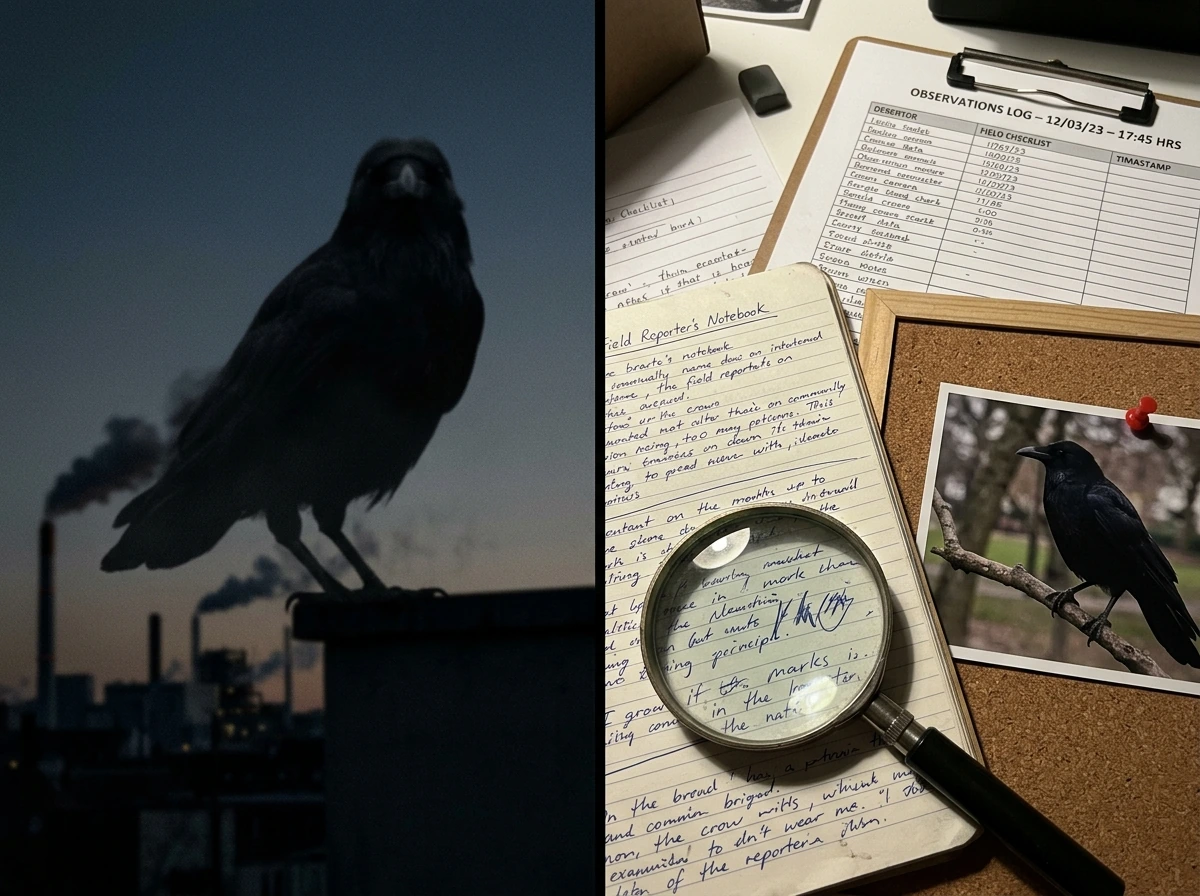
The story has a few different versions circulating online, but they share a common core. The most widely repeated version claims that in the hours immediately following the April 26, 1986 reactor explosion, plant workers reported seeing a large black, bird-like creature, sometimes described as having a wingspan of up to 20 feet. Later retellings add increasingly specific physical details: a twisted, blackened beak, sharp quills with a sickly greenish hue, and eyes glowing crimson.
One variant gives the creature a name, 'Molokh,' and frames it as a kind of radioactive omen or supernatural entity. Another framing presents it as part of a broader Chernobyl 'paranormal activity' narrative, grouping the bird alongside ghost sightings and mutant animal stories as entertainment content.
None of these versions cite a specimen, a field observation log, a wildlife survey, or any named researcher. The traits get more elaborate with each retelling, which is a classic signature of folklore rather than documentation. The story appears on Creepypasta Wiki, Reddit fiction sandboxes, and entertainment-focused ghost story sites, not in ornithology journals or wildlife agency databases.
Is there any documented evidence of a specific 'black bird' from Chernobyl?
No. When you follow the sourcing trail for the 'black bird of Chernobyl,' it collapses almost immediately. The claims trace back to anonymous online posts rather than eyewitness testimony collected by journalists, scientists, or official investigators. No ornithologist, no Chernobyl exclusion zone researcher, and no wildlife biologist has published a report describing a creature matching these traits. The 1986 disaster was extensively documented by Soviet authorities, medical teams, and later by international scientific bodies. None of that documentation includes a giant black bird.
There are real black birds associated with the Chernobyl region, which may have seeded the folklore. Common ravens (Corvus corax) and carrion crows (Corvus corone) are large, black, and have been observed in and around the exclusion zone. Ravens can have wingspans up to about 4. The Smithsonian Oceanography portal notes that the wandering albatross has the largest wingspan of any bird, at about 3.5 meters (11.5 feet). 5 feet, which is genuinely impressive but nowhere near 20 feet. It's plausible that exaggerated descriptions of large corvids, combined with the inherently frightening context of a nuclear disaster, gave the legend somewhere to grow. But a large raven is a raven, not evidence of a new mutated species.
What radiation actually does to wildlife (and what it doesn't)
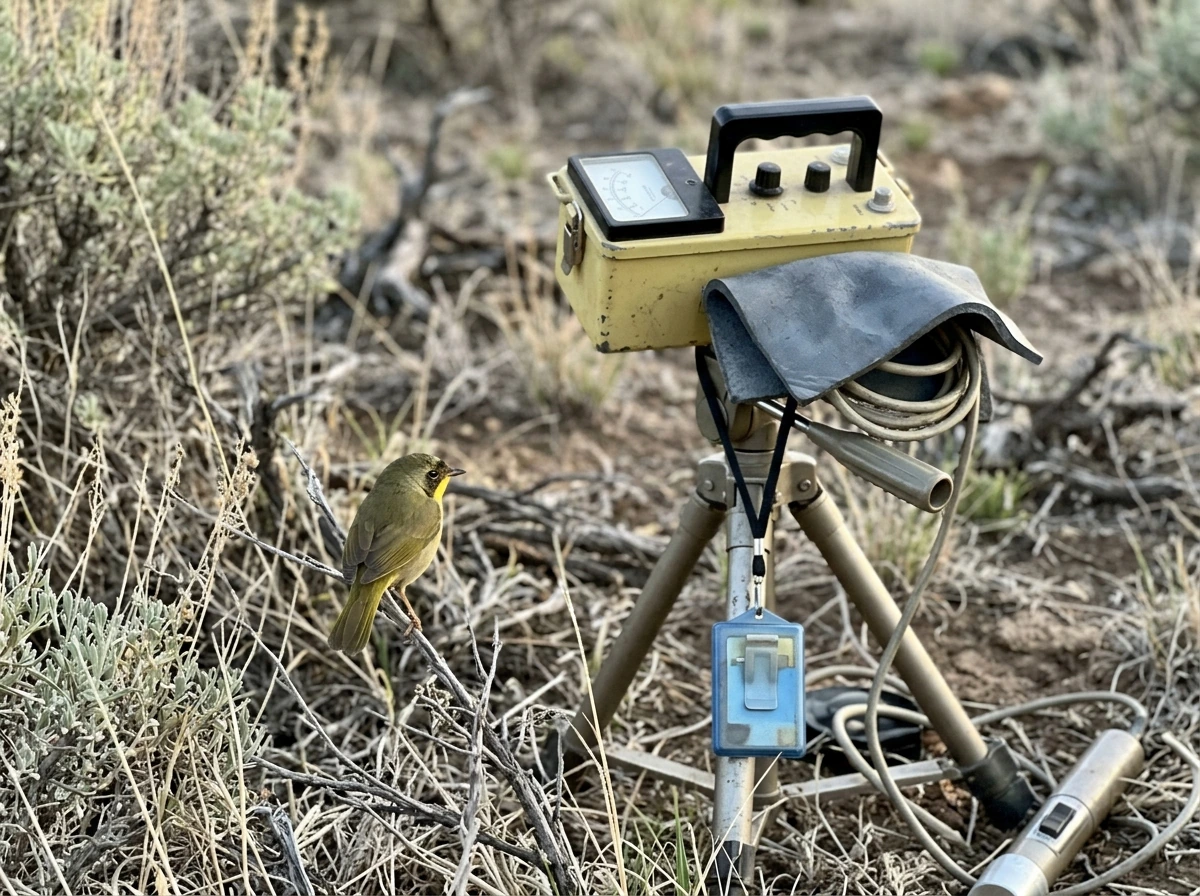
Radiation's real effects on wildlife are genuinely documented and worth understanding, precisely because sensational myths like the black bird story distort what the science actually says. High-dose radiation exposure causes cellular damage, primarily to rapidly dividing cells. In animals near Chernobyl in 1986, this meant acute radiation syndrome, reproductive failure, and elevated cancer rates in the years that followed. Studies of barn swallows in the exclusion zone found reduced survival rates, partial albinism, asymmetrical feather growth, and smaller brain sizes in some populations. These are real, measurable effects. But they look like subtle biological variation, not the dramatic monster-movie mutations that folklore describes.
The reality is that radiation doesn't produce 20-foot wingspans, glowing quills, or crimson eyes. Gross morphological mutations on that scale are not biologically plausible from radiation exposure. What radiation produces at the population level is reduced fitness, increased developmental abnormalities, and shorter lifespans. Most severely affected individuals don't survive to reproduce.
The animals thriving in the Chernobyl Exclusion Zone today (and wildlife surveys confirm there are many) are generally those whose lineages were less affected or better able to tolerate background radiation levels, which have dropped significantly from 1986 peaks. Camera-trap and wildlife monitoring efforts in the Chernobyl Exclusion Zone have documented that blank" rel="noopener noreferrer">wildlife remains abundant and measurable there, as described by The Wildlife Society's Wild Cam research wildlife monitoring and camera-trap research in the Chernobyl Exclusion Zone.
It depends on the dose, the species, and the timeline. Animals in the highest-contamination 'Red Forest' zone still show measurable genetic and physiological effects. Animals in lower-contamination areas of the exclusion zone often show population densities higher than in surrounding human-inhabited regions, partly because human activity is the bigger stressor for most wildlife. Chernobyl's exclusion zone has become, ironically, a de facto wildlife refuge for wolves, lynx, horses, and hundreds of bird species.
How birds in Chernobyl are actually described
Ornithological surveys of the Chernobyl Exclusion Zone have documented over 200 bird species in the region. The birds most studied for radiation effects include barn swallows (Hirundo rustica), great tits (Parus major), and various raptors. Researchers like Timothy Mousseau and Anders Møller have published extensively on bird populations in the zone, finding reduced species diversity and abundance in the most contaminated areas, but the birds themselves look like birds. They're smaller than average in some cases, show occasional plumage abnormalities, or have reduced cognitive function in tested populations, but they don't display the kind of dramatic visible mutations the black bird legend describes.
Common species you'd actually encounter in or near the exclusion zone include white-tailed eagles, black storks, great grey owls, and yes, ravens and crows. The black stork (Ciconia nigra) is worth mentioning specifically because it's a large, striking bird with glossy black plumage that nests in remote forested areas, exactly the kind of species that could inspire exaggerated descriptions if someone unfamiliar with it saw one in an unsettling context. None of these birds are mutants. They're just wildlife that moved into an area humans vacated.
Do Chernobyl-associated birds pose special risks to people or pets?
For the vast majority of people, this is a theoretical question rather than a practical one, because almost no one casually encounters birds from the Chernobyl Exclusion Zone. The zone is in northern Ukraine, access is restricted, and the birds living there are wild animals that don't migrate to your backyard with special radioactive properties. So, is bird blindness real? In most cases, it's either treatable injury, disease, or a misunderstanding rather than a true radiation-driven condition caused by the Chernobyl story special radioactive properties. Migratory species that pass through the region don't carry meaningful radiation loads in their bodies by the time they've traveled hundreds of miles.
That said, if you're a researcher, tourist, or journalist actually visiting the exclusion zone, standard guidance applies: don't handle wildlife, don't eat anything from the zone, and follow dosimetry protocols. Birds in high-contamination areas could theoretically carry surface contamination on feathers, but this isn't a realistic exposure pathway for casual visitors who follow basic precautions. For pet owners worried about their birds or outdoor cats encountering 'Chernobyl mutants,' you can set that concern aside entirely.
That said, if you're a researcher, tourist, or journalist actually visiting the exclusion zone, standard guidance applies: don't handle wildlife, don't eat anything from the zone, and follow dosimetry protocols. Birds in high-contamination areas could theoretically carry surface contamination on feathers, but this isn't a realistic exposure pathway for casual visitors who follow basic precautions. For pet owners worried about their birds or outdoor cats encountering 'Chernobyl mutants,' you can set that concern aside entirely.
The threat to your pets from ordinary urban or suburban wild birds (disease transmission like avian influenza, parasites, or territorial attacks) is vastly more real and worth more of your attention. are bird eye chillies hot
How to fact-check viral 'mutant animal' stories
Stories like the black bird of Chernobyl follow a predictable pattern, and once you know the pattern, they're easy to spot. Here's what to look for and what to watch out for:
- No named source: Legitimate wildlife observations are tied to a researcher, a field station, a government agency, or at minimum a named journalist. If the story says 'workers reported' or 'witnesses claimed' without any names or documentation, that's a red flag.
- Escalating detail without evidence: Folklore grows more specific over time, not less. If later versions of a story have more elaborate physical descriptions than early versions, it's being embellished rather than clarified by new evidence.
- Impossible biology: A 20-foot wingspan would make a bird larger than any known flying animal in Earth's history. If a claim involves traits that violate basic biology, it doesn't need a wildlife expert to debunk, just a quick size comparison.
- Entertainment-site origin: Check where the story first appeared. Creepypasta wikis, Reddit fiction forums, and ghost story aggregators are not sources. They're creative writing platforms.
- Absence from scientific literature: Genuine wildlife discoveries, especially anything as dramatic as a new large species, appear in peer-reviewed journals, wildlife agency databases, or credible news outlets covering science. Search Google Scholar, the IUCN Red List, or eBird for the species name.
- Reverse image search: Viral 'mutant animal' photos are almost always stock photos, wildlife photos from unrelated contexts, or CGI. Run the image through Google Images or TinEye before accepting it as evidence.
Credible sources for wildlife claims include the IUCN Red List, eBird (operated by Cornell Lab of Ornithology), peer-reviewed journals like The Condor or Journal of Wildlife Management, and coverage from science journalists at outlets like Science, Nature, or New Scientist. If a creature claim doesn't show up in any of those places, it almost certainly isn't real.
Comparing the legend to the evidence
| Claim from the legend | What the evidence actually shows |
|---|---|
| 20-foot wingspan | Largest real bird (wandering albatross) has an 11.5-foot wingspan; no bird approaches 20 feet |
| Twisted, blackened beak from radiation | Radiation causes cellular damage and developmental issues, not gross beak deformations of that kind |
| Sharp, glowing green quills | Birds have feathers, not quills; no radiation effect produces bioluminescence in birds |
| Crimson glowing eyes | No documented radiation effect produces glowing eyes in any vertebrate |
| Seen immediately after the explosion | The explosion site was chaotic and lethal; no credible wildlife observation record exists from those hours |
| Named species or specimen | No species description, no specimen, no field report exists in any scientific database |
What to do if you find an unusual bird in the real world
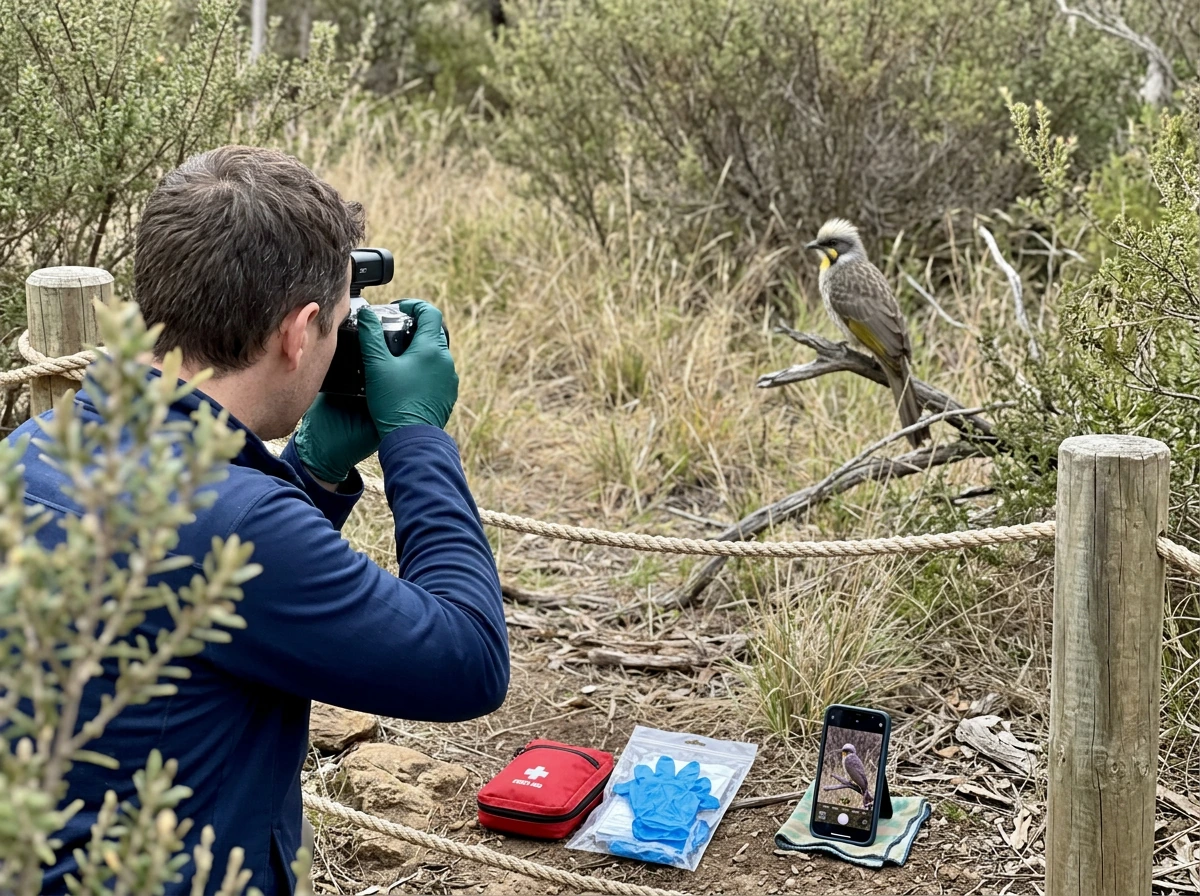
This is where practical guidance matters most. Unusual-looking birds do exist, whether from genuine developmental abnormalities, leucism (partial loss of pigmentation), or simply being a species you've never seen before. Finding one doesn't mean you've stumbled onto a mutant. Here's how to handle it safely and responsibly.
- Don't handle it with bare hands. Wild birds can carry salmonella, avian influenza, and external parasites. If you need to move an injured bird, use gloves or a thick cloth and place the bird in a ventilated cardboard box.
- Photograph it from a safe distance. A clear photo from multiple angles is your best tool for identification. Don't stress the bird by getting too close.
- Use a field identification resource before assuming anything unusual. Apps like Merlin Bird ID (from Cornell Lab) can identify most North American and European species from a photo in seconds. What looks strange to you often has a perfectly ordinary explanation.
- Contact your local wildlife rehabilitator or animal control agency if the bird is injured or behaving abnormally. They have the training and legal authority to handle wild birds safely.
- Report genuinely unusual observations through eBird or your national wildlife agency. Citizen science data is valuable, and a well-documented sighting of something genuinely odd will be taken seriously if it comes with photos and location data.
- Keep pets indoors or supervised if an unknown wild bird is in your yard. This is standard practice regardless of how unusual the bird looks, because disease and parasite transmission are the real concerns with wild bird contact.
The bottom line on the black bird of Chernobyl is this: it's a piece of internet folklore with no scientific foundation, built on anonymous retellings and biologically impossible traits. If you are wondering whether the fever dream bird is real, the answer is the same: it is not supported by documented evidence and belongs to internet folklore is the fever dream bird real.
(If you're asking whether what happens if the fever dream bird looks at you, you can treat this claim the same way: as folklore, not evidence. ) what happens if the fever dream bird looks at you (If you’re wondering about other wildlife myths, you may also be asking whether can you blind a bird with a laser.
) can you blind a bird with a laser The real story of wildlife in the Chernobyl Exclusion Zone is genuinely fascinating and worth reading about through the published work of researchers like Mousseau and Møller, but it involves subtle population-level effects, not monsters. If you encounter a bird that looks strange or unfamiliar, the answer is almost always mundane: it's a known species you haven't seen before, or an individual with a common developmental variation.
Start with the science, and the folklore takes care of itself.
FAQ
How can I tell if a “Chernobyl black bird” claim is just folklore or something real?
Check whether the story includes verifiable details like a named observer, date, location, and a specimen reference (photo, preserved body, or testable measurement). Claims that stay at “anonymous witnesses” and “internet posts” without a traceable chain of custody are classic reposted folklore.
Did anyone ever officially debunk the “Molokh” or “black bird” story from Chernobyl?
There is no known official investigation that produced a formal scientific conclusion because the core of the claim never rose to the level of documented evidence. The legend persists because it is easy to retell and does not rely on any measurable record.
Could the legend be based on a real bird misidentified in 1986?
It could be, especially if someone saw a large corvid under stressful conditions and later the description was exaggerated over time. Ravens and crows can appear very dark, menacing, and large at close range, which can inflate wingspan estimates.
Are there any birds in the Chernobyl area that look “mutated” enough to fuel these stories?
Researchers do report developmental and population-level abnormalities in some species, like abnormal feather growth or reduced survival in higher-contamination areas. But these are generally subtle and do not translate into the dramatic, creature-feature traits described in the black bird legend.
Can radiation actually cause a giant wingspan or glowing eyes in an animal?
Not in the straightforward monster-story way. Radiation can damage DNA and affect development, but the kind of rapid, extreme morphological changes (like 20-foot wingspans) are not biologically plausible from radiation exposure alone.
If birds in Chernobyl are affected, would it be dangerous to approach or take photos of them?
For casual visitors, the primary risk is practical safety (stepping off designated areas, contaminated surfaces) and basic wildlife safety, not “mutant” behavior. Avoid handling birds, avoid consuming anything from the zone, and follow dosimetry guidance if you are there in person.
Could feathers or droppings from an exclusion-zone bird expose me to radiation?
In principle, surface contamination could exist on materials exposed in higher-contamination areas. In practice, the realistic exposure for most people is negligible because access is restricted and standard precautions prevent close contact and contamination spread.
Do migratory birds carry enough contamination to bring “Chernobyl mutations” elsewhere?
Not in a way that supports the folklore. Migratory species may pass through the region, but they do not retain enough meaningful contamination to produce noticeable “mutant” effects after traveling long distances.
What should I do if I see a strange-looking bird and I’m worried it’s related to Chernobyl?
Treat it as a normal explanation first. Identify the species using field marks and size relative to familiar birds, then consider common developmental variations like leucism, illness-related plumage issues, or being unfamiliar rather than mutant.
Is there any credible database or type of source I can use to verify unusual wildlife claims?
Use recognized biodiversity and ornithology channels that include observations and citations, then compare the claim’s traits to documented species. If it never appears in reputable wildlife survey work and only lives in entertainment posts, it is almost certainly not real.