The 'fever dream bird' is not a real species, a newly discovered animal, or a cryptid. It is an animated creature from a 1973 Romanian short film called The Galaxy (Galaxia), directed by artist Sabin Bălașa, that went viral on TikTok in late 2025 after years of quiet existence on YouTube. If you searched for this because you saw a strange, unsettling bird clip circulating online and wanted to know whether it depicts a real animal, the short answer is no. What you're looking at is artistic animation, not footage of a living bird.
Is the Fever Dream Bird Real? How to Verify the Claim

Marcus Whitmore
23 Mar 2026

What 'fever dream bird' could actually mean
The phrase is ambiguous enough that different people search for it with completely different things in mind. Before assuming you're dealing with a hoax, a species rumor, or a real hazard, it helps to know the main ways the term gets used.
- An animated creature from a viral meme: this is by far the most common usage, referring to the bird-like figure from Sabin Bălașa's 1973 animated film The Galaxy, which spread across TikTok and Instagram in 2025.
- A metaphorical description of a real bird: people sometimes describe genuinely bizarre-looking real birds (shoebills, hoatzins, frogmouths) as 'fever dream' animals because they look surreal or unsettling.
- A misidentified animal from a blurry photo or video: a real bird photographed in poor light or mid-motion can look otherworldly, and the 'fever dream' label gets applied after the fact.
- A fictional creature or creepypasta: some online spaces use 'fever dream bird' as a catch-all for any strange bird-adjacent thing that seems too weird to be real.
- A search tied to the phrase 'fever bird dream': this is essentially the same query reversed, and it leads to the same meme content.
The medical meaning of 'fever dream' (the vivid, strange hallucinations that can accompany a high fever) is what makes the label stick so well to bizarre-looking imagery. It signals something that feels real but probably isn't, or something so strange it seems like it couldn't exist. That linguistic framing is doing a lot of work in how this meme spread, and it's exactly why the phrase causes so much confusion.
Is it an actual species, a rumor, or a fictional internet creature?
It is a fictional animated creature with a documented, traceable origin. The full short film The Galaxy (Galaxia) was uploaded to the official Sabin Bălașa Animation Films channel on YouTube on May 12, 2018, and IMDb lists it as a 7-minute short from 1973. The bird-like figure appears at the 6:48 timestamp in that film. An Instagram repost by @real.
young. man on May 2, 2025 helped push the clip into wider circulation, and TikToker @mayjay_15 is credited by Know Your Meme with standardizing the 'fever dream bird' caption overlay that made the meme recognizable. By late 2025, the label had become a consistent meme format, with GIF versions being created and catalogued (one Tenor GIF entry shows a creation date of December 14, 2025).
The reality is that no ornithological body, wildlife organization, or credible scientific source has described or catalogued a species called the 'fever dream bird.' There is no Latin name, no field guide entry, no museum specimen, and no peer-reviewed description. The creature exists entirely within the context of a 52-year-old Romanian animated art film that the internet rediscovered and labeled.
How to verify a bird claim using actual evidence
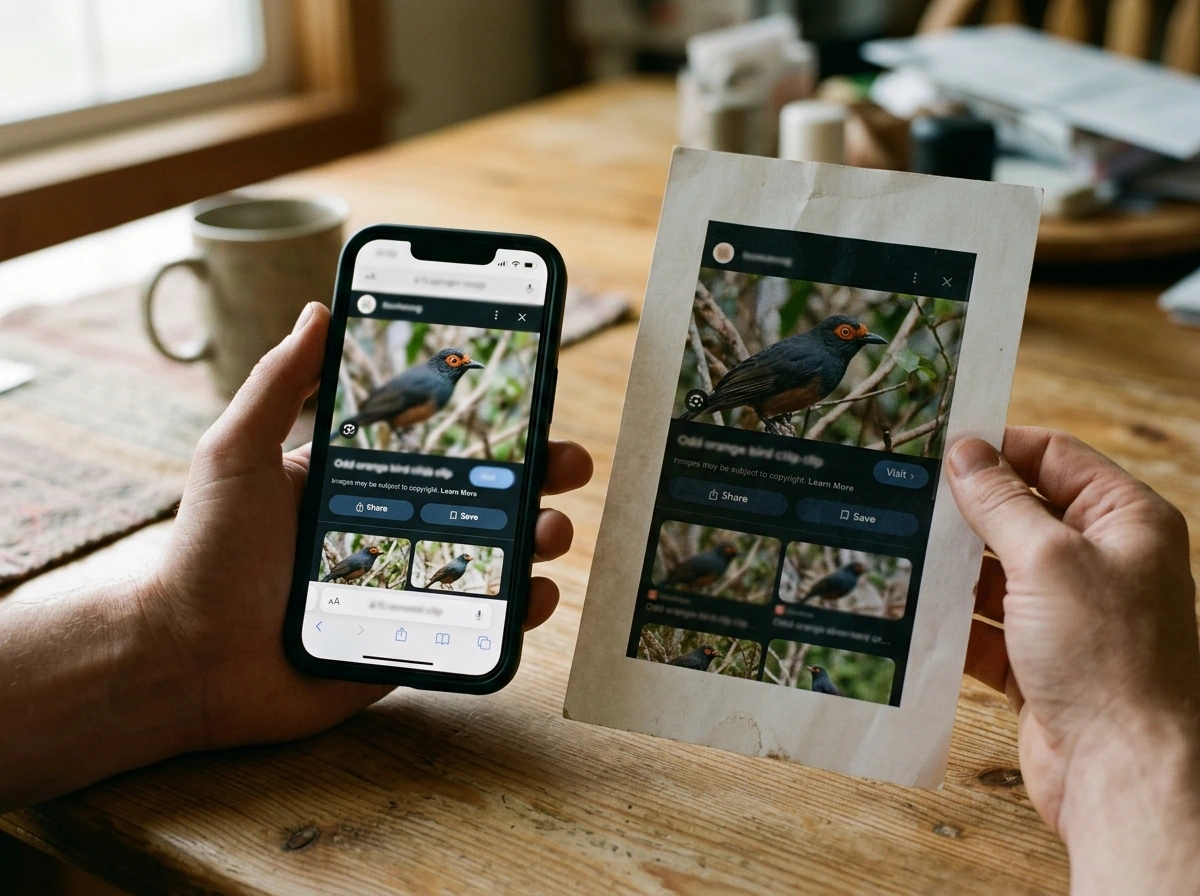
Whether you're looking at the fever dream bird specifically or any other strange bird claim online, the verification process is the same. Here's what to do today if you're trying to figure out whether a bird you've seen (in a video, photo, or in person) is real and identifiable.
Start with a reverse image search
Take a screenshot of the clip or image and run it through Google Images or TinEye. This will tell you the earliest known appearance of that image online and where it was first posted. For the fever dream bird, a reverse image search quickly surfaces the Sabin Bălașa film and the meme context, which is itself a verification. If a supposed 'new species' appears only in meme accounts and has no hits in news databases, scientific journals, or wildlife photography archives, that's a strong signal it isn't real.
Check the physical traits against real field marks
For any bird claim, Audubon and the Cornell Lab's All About Birds recommend using what are called blank" rel="noopener noreferrer">field marks: bill shape, body and wing shape in flight, plumage features visible at a distance, and audio cues like calls and songs. Cornell Lab's widely used 'four keys' framework adds beak shape, wing bars, and tail length as the most reliable anchors for identification. Color alone is not reliable because lighting, distance, and molt can shift what you see dramatically. The fever dream bird fails every one of these checks because it has no consistent, biologically plausible anatomy, it's animated art, not a living organism with observable field marks. It's animated art, not a living organism with observable field marks.
Assess geographic plausibility
Location matters enormously in bird identification. Audubon explicitly notes that habitat and location context can narrow a sighting faster than almost any other variable. If someone claims they photographed a 'fever dream bird' in their backyard in Ohio, ask what species are actually native to that region and whether the photo matches any of them. Tools like eBird, which the Cornell Lab maintains, let you filter by location and date to see what species have been legitimately reported in that area. eBird's own best practices guidelines emphasize accurate reporting over assumption, which is exactly the mindset to bring to any unusual sighting claim.
Quick verification checklist
- Run a reverse image search on the original clip or image.
- Check whether the image appears in any scientific, journalistic, or wildlife photography context.
- Identify the bill shape, wing shape, and tail length and compare to field guides.
- Cross-reference the claimed location with eBird or Audubon's species range maps.
- Look for audio: real birds make calls that can be matched against recordings in Cornell Lab's Macaulay Library.
- Ask whether the 'fever dream' label is metaphorical description or an actual claimed species name.
Real birds that get mistaken for the 'fever dream' thing
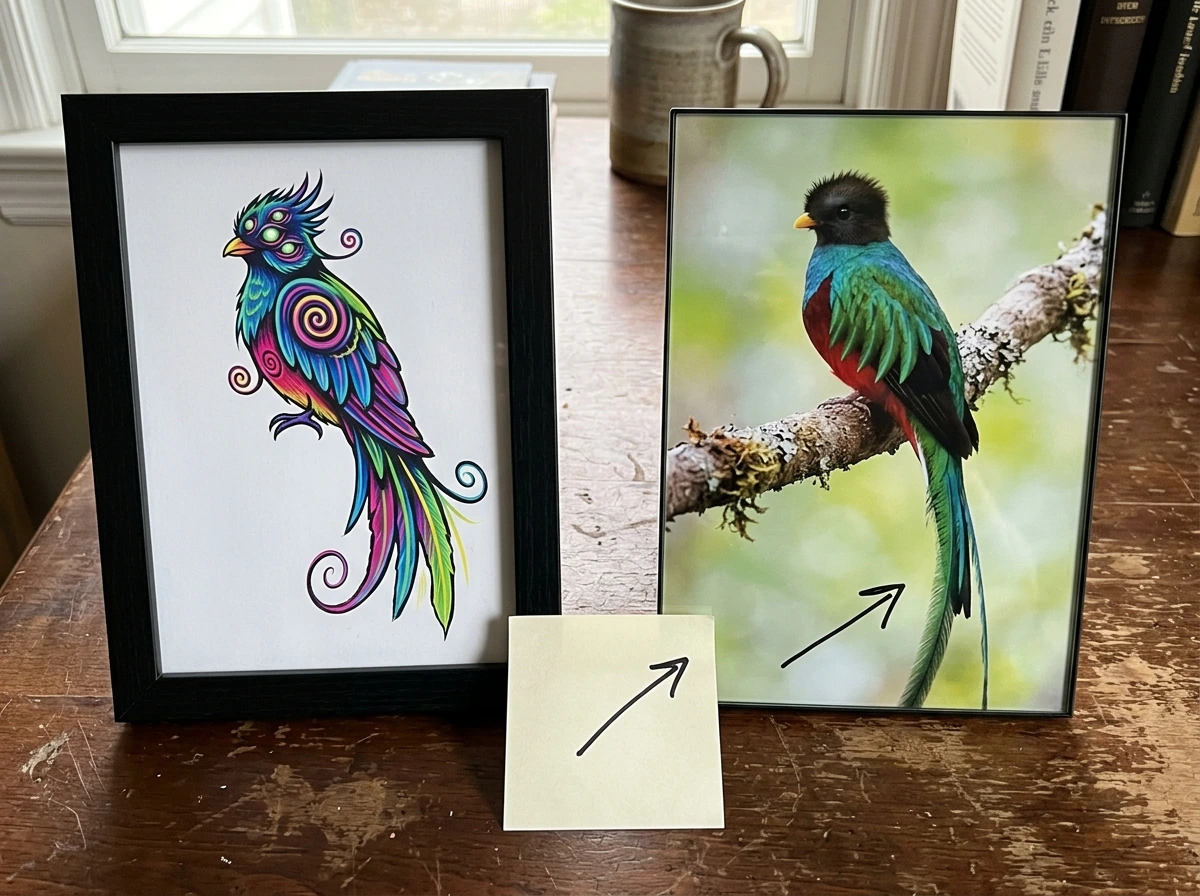
Part of why the 'fever dream bird' concept resonates is that genuinely real birds can look extraordinarily strange. Misidentification happens all the time, even among experienced observers, and some species genuinely look like they came from a hallucination. Here are the real birds most commonly described in 'fever dream' terms online.
| Bird | Why it looks surreal | Where it's found |
|---|---|---|
| Shoebill (Balaeniceps rex) | 5-foot-tall, gray, prehistoric-looking; enormous shoe-shaped bill; stands motionless for long periods and stares | Central African wetlands |
| Hoatzin (Opisthocomus hoazin) | Spiky crest, red eyes, clumsy flier; chicks have functional wing claws; smells strongly of manure | Amazonian rainforest |
| Tawny Frogmouth (Podargus strigoides) | Bark-patterned camouflage, frozen posture, enormous wide mouth; often mistaken for an owl or a piece of tree | Australia and Tasmania |
| Long-wattled Umbrellabird (Cephalopterus penduliger) | Black crest like an umbrella, long hanging wattle on its chest; looks like a cartoon villain | Cloud forests of Ecuador and Colombia |
| Marabou Stork (Leptoptilos crumenifer) | Bald scabby head, hanging throat sac, hunched posture; often seen at carrion; described as 'nightmare bird' | Sub-Saharan Africa |
Any of these birds could show up in a social media clip with a 'fever dream' caption and genuinely confuse someone into thinking they're looking at something that shouldn't exist. They are all very real, all photographed extensively, and all documented thoroughly in mainstream ornithology. If you're trying to figure out whether a strange bird clip is real, checking it against this group of genuinely bizarre real species is a solid starting point. A sibling article on this site goes deeper into the specific question of what happens if the fever dream bird 'looks at you,' which is another angle of the same meme that's worth reading if you want more context on how the fictional creature is being used online.
Why 'fever dream' causes so much confusion as a descriptor
The phrase 'fever dream' is metaphorical by design. In everyday language it means something vivid, strange, and probably not real, or something real that feels like it couldn't be. That's very useful for describing art or unsettling experiences, but it becomes a problem when the label migrates from a meme caption into a sincere search query.
When someone asks is the flying bird cat toy real, they're often asking whether the thing they saw, which was labeled with that metaphor, actually exists in nature. The phrase 'fever dream' is metaphorical by design. In everyday language it means something vivid, strange, and probably not real, or something real that feels like it couldn't be.
That's very useful for describing art or unsettling experiences, but it becomes a problem when the label migrates from a meme caption into a sincere search query. When someone asks 'is the fever dream bird real,' they're often asking whether the thing they saw, which was labeled with that metaphor, actually exists in nature. is bird blindness real
The meme format amplified this confusion by presenting the animated clip without context. TikTok's short-form format strips away the film title, the director's name, and the 1973 production date. What's left is a looping animation of a strange bird-like figure, captioned 'fever dream bird,' shared by accounts that don't identify the source. Many viewers genuinely do not know they're watching a 52-year-old animated art film. This is how 'is the black bird of Chernobyl real' type questions circulate alongside this one: both are cases where a dramatic visual and an evocative label spread faster than the explanatory context.
The word 'fever' specifically implies disease or delirium, which adds a layer of medical plausibility to people who encounter these searches. Some searchers land on 'fever dream bird' because they're asking whether feverish illness can make you see or dream about birds (a neurological question), while others are asking about the meme creature, and others are asking whether a real bird they've seen could be called that. Those are three completely different questions wearing the same search query, which is why this article exists.
Practical takeaways for pet owners and anyone living near birds
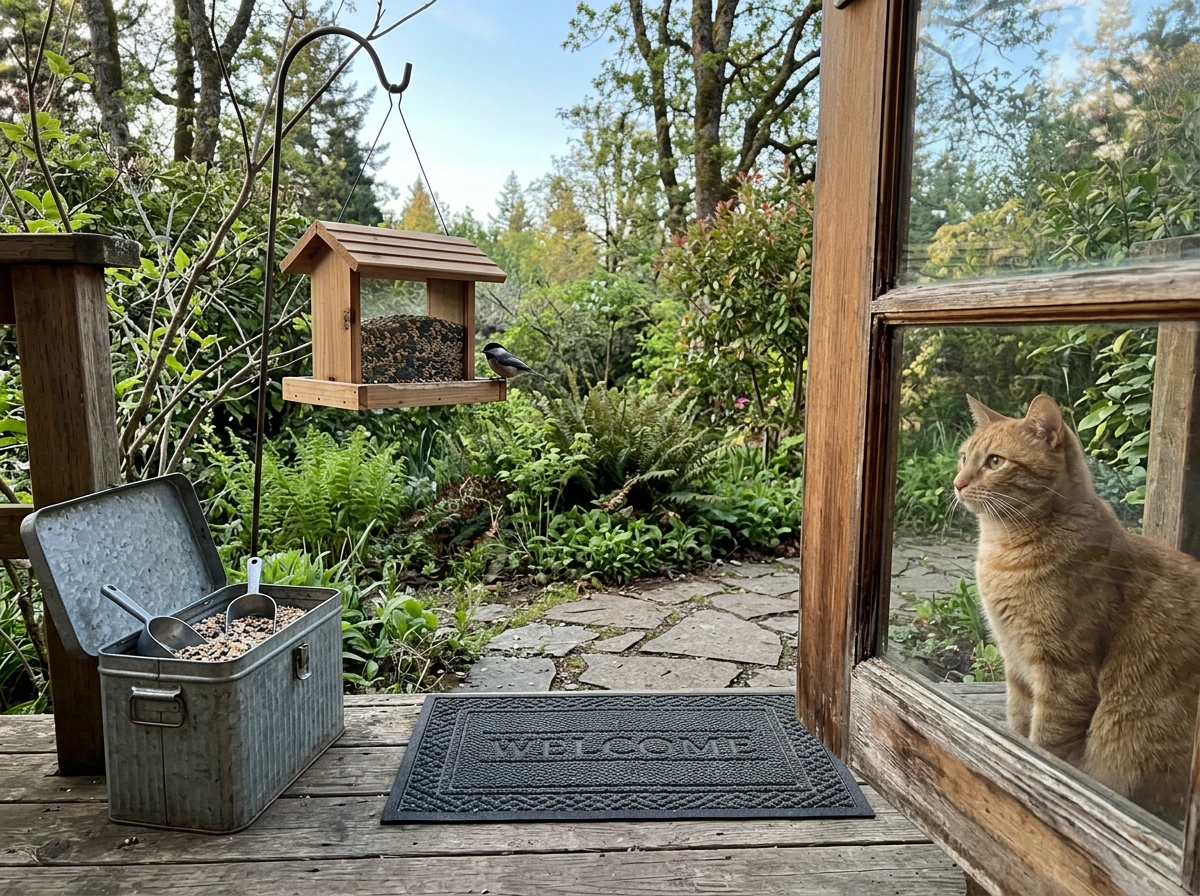
If you arrived here because a 'fever dream bird' claim made you worried about a real-world bird hazard to yourself, your pets, or your household, here's what actually matters based on current public health guidance.
Disease risks from birds are real but manageable
The CDC recommends washing your hands after touching birds, their droppings, or any items from their enclosures. This is basic hygiene, not a dramatic precaution. Psittacosis, a bacterial infection spread by birds (particularly parrots and related species), is a genuine risk for bird owners, and the CDC notes there is no vaccine for it, making hygiene and routine veterinary care the main defenses. For wild bird contact, the same hand-washing guidance applies.
Bird flu and cats: a real concern right now
This is the one area where the safety picture has shifted meaningfully in recent years. The CDC has confirmed that cats can be infected with highly pathogenic avian influenza (H5N1), and the ASPCA recommends monitoring cats for symptoms and reducing their exposure to wild birds and poultry. The FDA has also updated food safety guidance to require manufacturers of cat and dog food to account for H5N1 as a known hazard in their safety planning. If your cat spends time outdoors near wild birds or you live near poultry operations, that's worth taking seriously. The CDC advises seeking medical evaluation if you develop symptoms after exposure to infected animals.
What doesn't require worry
Animated creatures from 1973 Romanian short films do not pose any bird-related health risk. Neither do metaphorical descriptions of real birds, creepypasta rumors, or meme clips. If your concern was triggered specifically by the 'fever dream bird' video and you're wondering whether it signals some newly observed dangerous species, it doesn't. The creature is not real in any biological sense, and no credible wildlife or public health authority has issued any guidance related to it. The risk calculus here is simple: treat real birds with basic hygiene care, watch your cats around wild bird populations, and apply the verification steps above to any future strange bird claim before sharing it.
The broader principle is worth keeping: 'fever dream' language in animal content is almost always a meme label, not a species designation. When you see it, the first move is to find the source, not to treat the claim at face value. In this case, the source is a beautifully strange 7-minute animated film from Romania, and it's genuinely worth watching if you're curious about where the 'bird' came from.
FAQ
If I saw it in my area, does that automatically mean the fever dream bird is real?
No. If the image or clip is the “fever dream bird” meme, it traces back to a specific animated short, not field sightings. A key check is whether any frame shows consistent anatomy across angles, or whether it looks like a stylized, looping character from an animation sequence.
What if reverse image search only brings up TikTok or GIF reposts, not the original film?
Reverse image search can fail when videos are re-uploaded with edits. Try searching a still frame that includes unique features (distinct head shape or wing pattern) and also search multiple frames (start, middle, and end). If all results point to the same animation upload and no wildlife reporting pages appear, treat it as meme content.
How can I tell whether a “new bird species” claim is missing the science it would normally have?
A “new species” should have at least one of these: a Latin binomial name, a museum or specimen record, or a credible taxonomic or field study discussion. If you only see the bird described in comment sections, fan pages, or meme captions, that is not enough to indicate a real species.
What should I do if the video is too blurry to use field marks like wing bars or tail length?
Field marks work best when you can see stable features clearly. If the clip is low resolution, motion-blurred, or the bird is too far away, prioritize getting a better look (zoom, higher-quality footage, or additional frames) before concluding it is unfamiliar or impossible.
Could “fever dream bird” be used by people to describe real, unusual species sometimes?
Yes, sometimes people use “fever dream bird” to refer to different strange-looking real birds, not just the meme animation. If you see claims tied to a location, ask for the actual species name they think it is, then compare it to what is plausible in that region and season rather than focusing on the meme label.
Can a real bird ever look animated or hallucination-like enough to be misidentified as the meme bird?
Don’t rely on “looks like it is animated” as a test only. Some real birds can appear surreal in motion or through bad lighting. The stronger decision aid is consistency with biology: feather structure, plausible beak and wing shape, and known range for the time and place shown.
How do I verify a “fever dream bird” claim made about a specific backyard or park?
Use location first. If someone claims a sighting, ask for the exact area (country, state/province, and habitat type) and approximate date/time. Then check local sightings using a bird database like eBird filters for that region and season, and compare the described bird’s traits to expected native species.
What are red flags that a viral “fever dream bird” post is unreliable or fabricated?
If the account refuses to share the original clip, upload date, or a higher-quality source, treat that as a red flag. Verification is usually easiest when you can trace the earliest appearance of the exact visual content, not just the caption.
If I am worried about a bird hazard after seeing the video, what precautions actually make sense?
If your concern is health, focus on real-world bird hygiene and known risks, not on the meme. For pet safety, the practical step is reducing cats’ unsupervised exposure to wild birds and following routine veterinary care, because avian influenza exposure is a real consideration in some regions.
Is there an easy way to confirm it is from the same animated short across reuploads?
Yes. If a source identifies it as a 1973 Romanian animated short, that is already strong context that it is not footage of wildlife. The goal is to confirm the provenance by matching the visual character to the credited film and timestamp, not to “authenticate” it like a live species.