Yes, bird blindness is real, but not in the way most people imagine it. There is no single disease called 'bird blindness' recognized in avian veterinary medicine. What's real is that birds can and do lose vision, partially or completely, as the outcome of several distinct medical conditions, ranging from cataracts to infections to neurological damage. The term gets used loosely online to describe everything from a pet parrot bumping into walls to a wild bird spinning on a sidewalk after hitting a window. This guide separates those situations and tells you what to actually do about each one.
Is Bird Blindness Real? Evidence, Causes, and What to Do

Marcus Whitmore
23 Mar 2026
Direct Answer: Is Bird Blindness Real?
Bird blindness, as a named diagnosis, does not exist in avian ophthalmology. Avian vets instead diagnose specific conditions like uveitis (internal eye inflammation), keratitis, corneal ulcers, cataracts, or neurological lesions affecting the optic nerve, and vision loss is described as a consequence of those conditions rather than a disease in its own right. So when someone asks 'is bird blindness real?' the honest answer is: vision impairment in birds is absolutely real and well-documented, but it's always caused by something specific, not by a single syndrome with that name.
People also use the phrase in two completely different ways. The first is the medical question: can a bird genuinely lose its sight? Yes, it can. The second is a myth that occasionally circulates: that birds can make humans blind, either by looking at them or through some kind of exposure. That one is false in any direct or folkloric sense, though bird-related infections can cause eye symptoms in humans, which we'll cover below.
Real Vision Impairment in Birds: What Actually Causes It
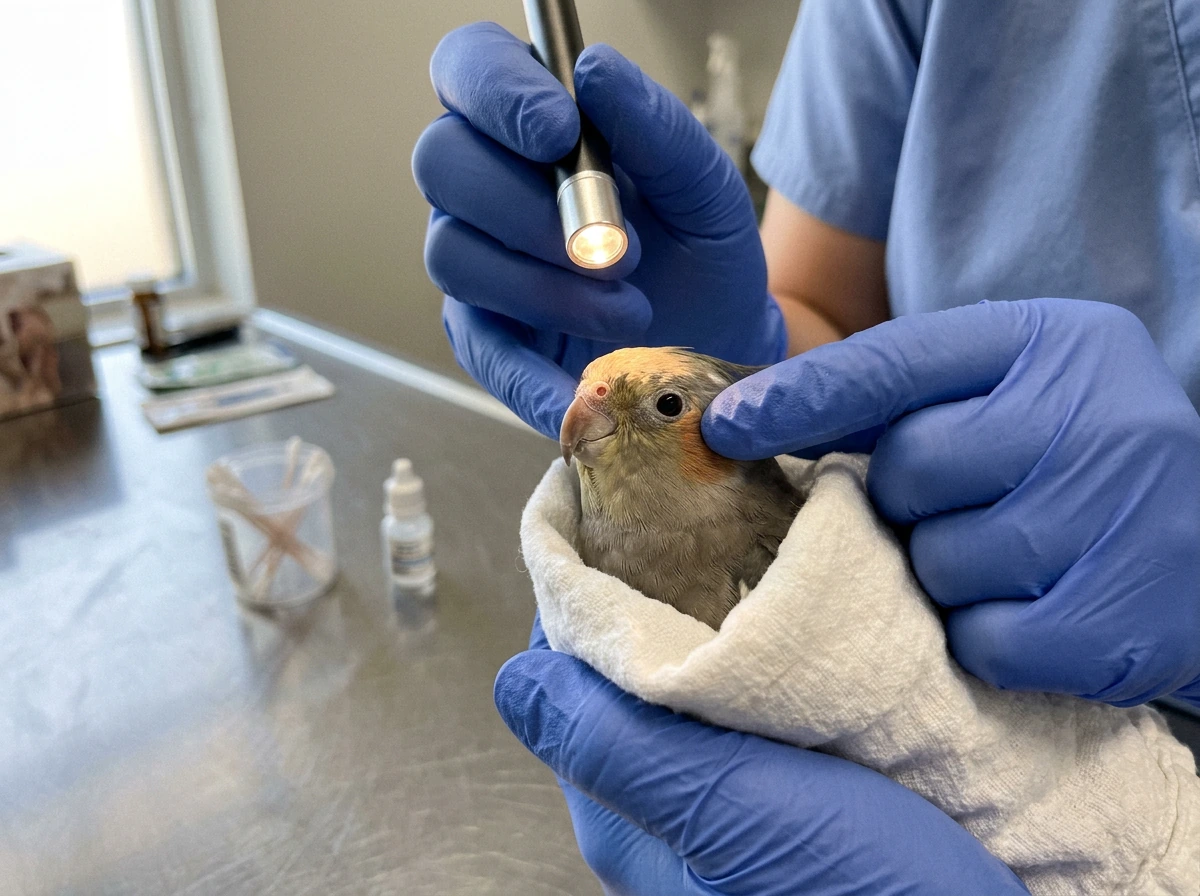
Birds can lose vision from a surprisingly wide range of causes, and they don't always show obvious signs until the impairment is significant. Here are the main categories avian vets and researchers actually work with.
Cataracts
Cataracts are the most commonly documented ocular disorder found in pet birds examined post-mortem, appearing in about 15.4% of birds (37 out of 241) in one quarantine-mortality study published in a peer-reviewed journal. When cataracts develop suddenly rather than gradually, birds may show a characteristic reluctance to come out of their cage or move around their enclosure, which is a behavioral sign of sudden visual impairment worth taking seriously.
Infections and Inflammation
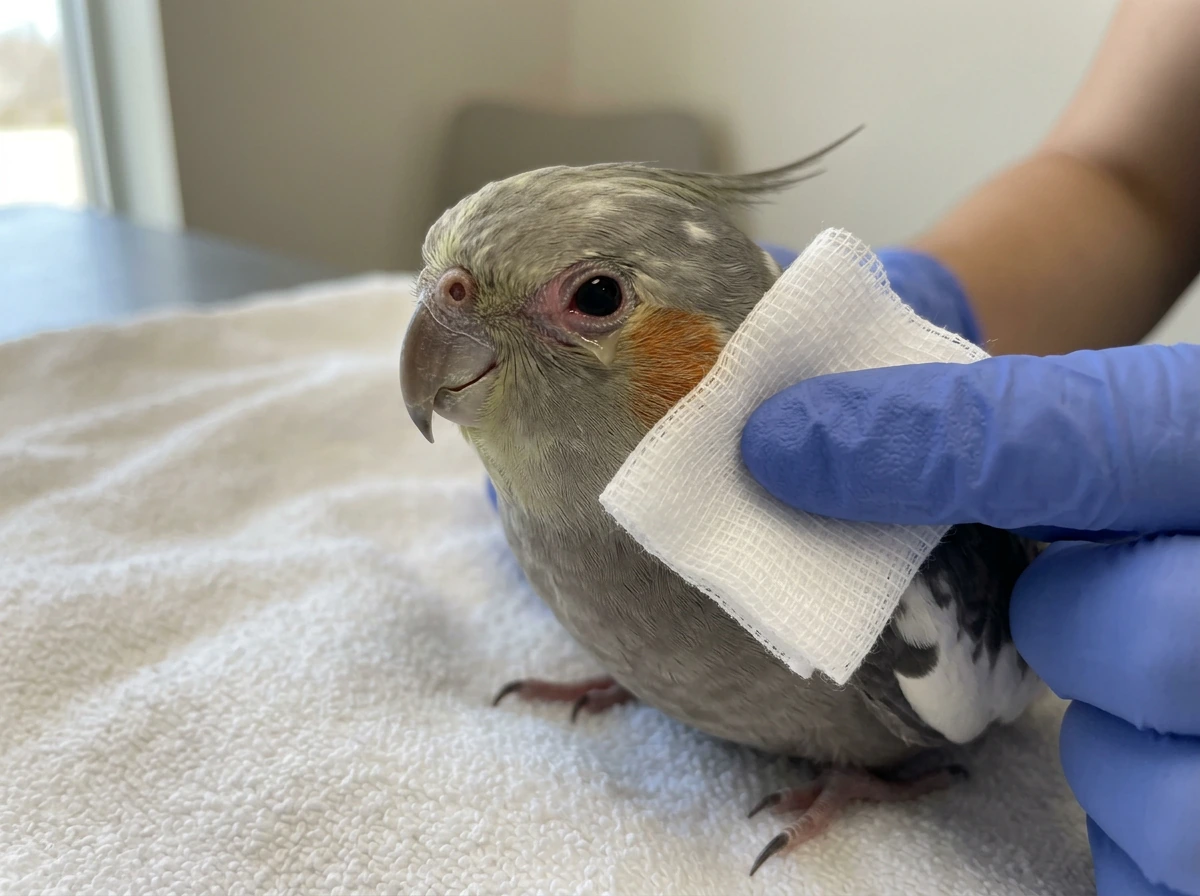
Conjunctivitis is one of the most common eye problems seen in pet birds, and it can progress to more serious conditions if left untreated. Uveitis, which is inflammation of the internal structures of the eye, can cause vision loss by reducing the transparency of key eye tissues. Infectious agents, including bacteria and pathogens like Staphylococcus hyicus in some contexts, poor air quality, high dust levels, and stress in captive environments are all documented risk factors for eye disorders in birds.
Nutritional Deficiency
Vitamin A deficiency is not uncommon in caged birds on poor diets and can lead directly to corneal drying, a condition called xerophthalmia, as well as keratoconjunctivitis. This is a fully preventable cause of vision impairment that pet owners often overlook.
Neurological Causes
Blindness in birds doesn't always originate in the eye itself. Lesions affecting the optic nerve or central nervous system can produce vision loss even when the eye looks structurally normal. A bird that has had an acute neurological episode, from trauma, toxin, or disease, can be left with lasting visual impairment as a sequela. This is clinically important because a normal-looking eye in a blind bird means the problem is upstream in the nervous system, not in the eyeball.
Trauma and Environmental Factors
Physical injury to the eye from impact, scratching, or foreign bodies can cause corneal ulcers or direct damage to internal eye structures. In farmed and wild birds, chronic exposure to high-dust environments, toxins, and stress compound these risks significantly.
Signs to Watch For: Home vs. Vet Emergency
One practical challenge with birds is that they are prey animals wired to hide weakness. By the time you notice something is off, the problem has often been developing for a while. That said, there are specific signs you can observe at home, and a clear threshold for when to stop watching and call a vet immediately.
Things You Can Observe at Home First
- Reluctance to leave the cage or sudden reduction in movement around a previously familiar space
- Misjudging perch distances or missing perches when landing
- Bumping into cage walls or objects the bird has navigated easily before
- Head tilting or unusual posture when looking at objects (birds are good at compensating with head movement)
- Behavioral changes like increased startle response or clinginess that coincide with reduced mobility
Signs That Require Urgent Veterinary Attention
The Merck Veterinary Manual is explicit on this: if you notice any of the following, contact an avian vet immediately, not tomorrow, not after the weekend. Merck Veterinary Manual advises that if a pet bird shows swelling, redness, discharge, excessive blinking, or prolonged closure of one or both eyes, it should be examined by a veterinarian as soon as possible.
- Swelling around or of the eye
- Redness of the eye or surrounding tissue
- Any discharge from the eye (watery, cloudy, or thick)
- Excessive blinking or squinting
- Holding one or both eyes closed for extended periods
- Visible cloudiness, haziness, or color change in the eye itself
Any of those signs means there is active ocular disease in progress. Avian eye conditions can progress very quickly to permanent vision loss. A bird holding an eye closed is not resting, it is in discomfort. Treat it like an emergency.
Bird Crashes and Disorientation: Rule These Out Before Assuming Blindness
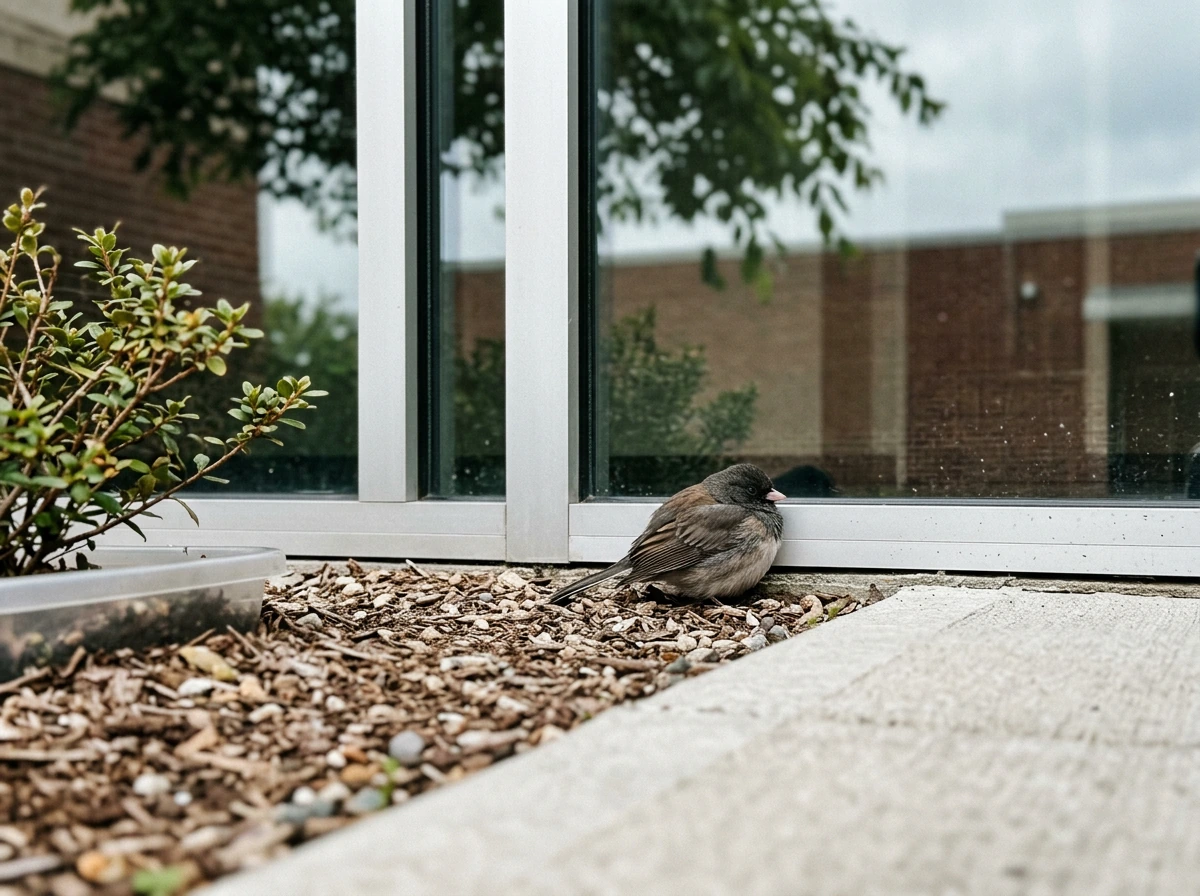
A lot of what gets described as 'bird blindness' online is actually something else entirely. If you are asking whether the “fever dream bird” is real, the same rule applies: look for a real medical cause and avoid treating it like a single named condition a lot of what gets described as 'bird blindness' online is actually something else entirely.. Window collisions are by far the most common reason a bird shows up disoriented, unable to fly properly, or sitting dazed on the ground. These birds look blind because they are temporarily stunned, not because their vision is permanently impaired.
Birds see highly reflective or mirrored glass as a continuation of habitat, not as a solid surface. Research published in Avian Conservation and Ecology confirms that highly reflective glass significantly increases collision risk. Homes with bird feeders near windows are at roughly double the collision risk compared to homes without feeders, according to U.S. Fish and Wildlife Service guidance. The bird was not blind before it hit the glass. The impact is what causes the temporary neurological disruption you are seeing.
A few other conditions that can look like blindness but are not the same thing:
- Orientation disruption from artificial lighting: birds navigating at night can become disoriented by building lights, communication tower lights, and other artificial sources, leading to circling, crashing, or grounding behavior
- Inner ear or vestibular problems causing head tilt and balance loss without true vision impairment
- Toxin exposure or poisoning causing neurological symptoms including apparent visual disorientation
- Severe illness or low blood sugar causing weakness that mimics vision-related movement difficulties
One important clinical note: birds do not have a menace response the way mammals do. An avian ophthalmology resource from Lafeber specifically flags this, because using the menace reflex to assess vision in birds will give you a false result. A visually impaired bird may not respond to a hand moving toward its face the way a dog or cat would, even if some vision remains. This is one reason assessing vision in birds requires an avian vet, not a home test.
Bird Blindness in Humans: What's Real and What Isn't
The idea that birds can make humans blind, whether through eye contact, a peck, or some kind of transmission, is folklore. There is no documented mechanism by which being looked at by a bird causes blindness in a human. Period. can you blind a bird with a laser
What is real is that bird-related exposures can cause eye symptoms in humans through two legitimate pathways: physical injury and infection.
Infectious Eye Symptoms from Bird Exposure
Mycoplasmal conjunctivitis, a bacterial infection documented in birds like house finches, can in theory transmit to humans through direct contact with infected birds or contaminated surfaces like bird feeders. Mycoplasmal conjunctivitis is transmitted via ocular discharge through direct contact with infected birds or [contaminated surfaces such as bird feeders](https://cwhl. vet. cornell.
edu/disease/mycoplasmal-conjunctivitis), according to Cornell University Center for Wildlife Health. The result would be conjunctivitis, meaning eye irritation and redness, not blindness. Separately, avian influenza A(H5N1) has presented with conjunctivitis as a primary symptom in some documented human cases, including California dairy workers who reported eye redness after exposure. The CDC includes conjunctivitis in the current case definition for H5N1 surveillance in humans.
The American Academy of Ophthalmology has acknowledged this pattern. Again, this is eye inflammation, not neurological blindness.
Physical Injury Risk
A bird peck or talon strike near the eye is a genuine risk of physical injury, and corneal damage from a bird's beak or claw should be treated as an ophthalmological emergency for the human involved. Raptors and larger parrots in particular can cause significant eye trauma. This is a physical hazard, not a disease process, but it is real and worth protecting against when handling birds.
The takeaway: birds cannot make you blind by looking at you. They can transmit infections that irritate or inflame eyes, and they can physically injure eyes if you handle them without care. Neither of these is 'bird blindness' in any folkloric sense, but the infectious pathway is worth taking seriously, especially in contexts involving H5N1 exposure.
What to Do Right Now: Step-by-Step for Pet Owners and First Responders
If Your Pet Bird Shows Eye Symptoms or Suspected Vision Loss
- Do not wait to see if it resolves on its own. Eye conditions in birds escalate fast. Call an avian vet today.
- Note exactly what you observed and when it started: which eye, what symptoms, any recent changes in diet or environment.
- Do not apply any eye drops, rinses, or home remedies without veterinary guidance. Human eye products are not appropriate for birds.
- Reduce perch height and complexity in the cage temporarily to minimize fall and collision risk while the bird is impaired.
- Keep the environment stable: minimize rearranging the cage, as a visually impaired bird relies heavily on spatial memory.
- Bring documentation of the bird's diet to the vet, specifically to rule out vitamin A deficiency as a contributing cause.
If You Find a Wild Bird That Appears Disoriented or 'Blind'
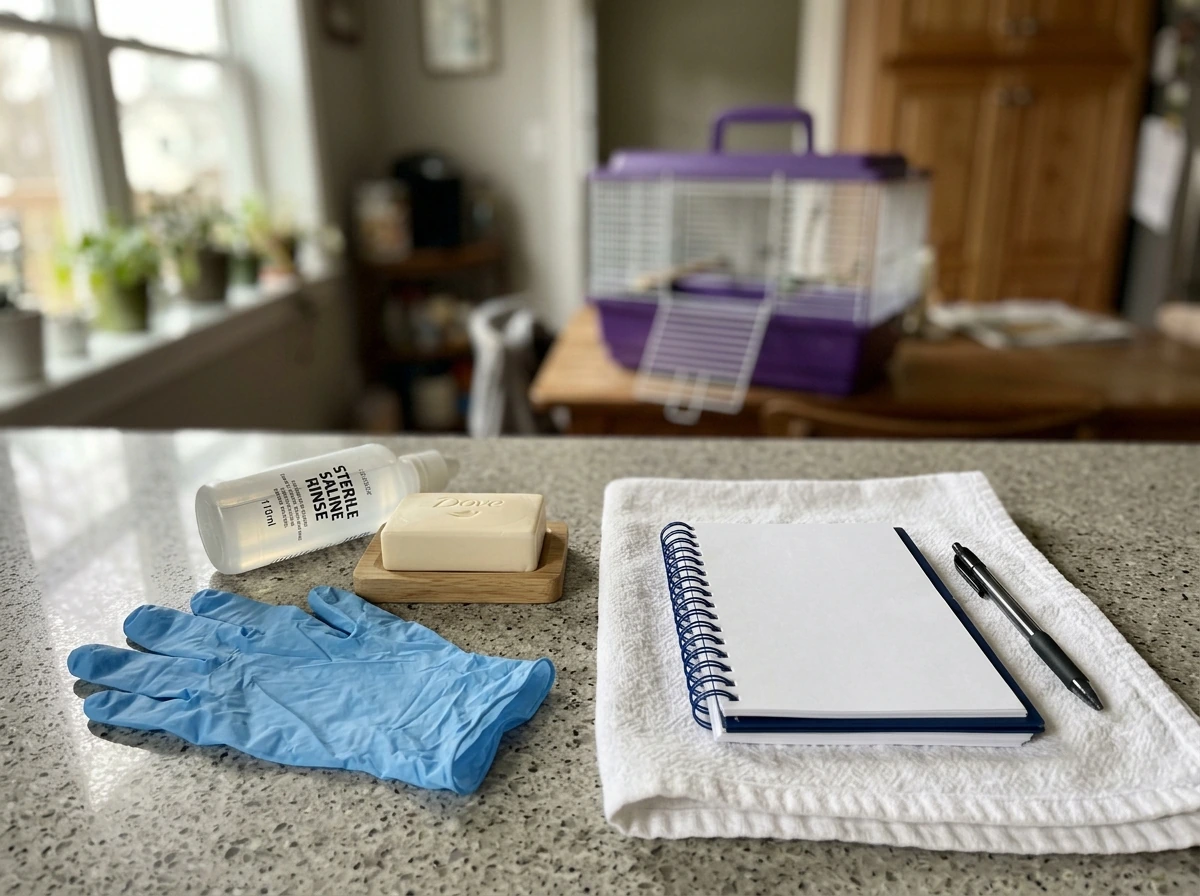
- Assess the scene first: look for a nearby window, glass surface, or wall that might explain a collision.
- Put on gloves before handling the bird. This protects both you and the bird from cross-contamination.
- Place the bird in a well-ventilated cardboard box lined with a soft cloth or paper towels. Do not use a mesh cage or open container.
- Keep the box in a warm, dark, quiet place away from people, pets, and noise. Stress alone can kill a bird in this state.
- Do not offer food or water. Incorrect feeding of a stunned or injured bird can cause aspiration.
- Check the bird every 30 minutes. A window-collision-stunned bird may recover on its own within 30 to 60 minutes and can be released if it flies away strongly.
- If the bird has not recovered within 1 to 2 hours, shows obvious injury (drooping wing, bleeding, unable to stand), or you suspect illness rather than trauma, contact a licensed wildlife rehabilitator immediately. The U.S. Fish and Wildlife Service and state wildlife agencies can direct you to local rehabilitators.
- Minimize handling throughout. Every unnecessary interaction adds stress that can be fatal to an injured bird.
If You Have Had Significant Exposure to a Sick Bird and Have Eye Symptoms
- Do not rub your eyes.
- Wash your hands thoroughly with soap and water immediately.
- If you have handled a bird in a high-risk context (sick poultry, wild waterfowl, or birds in areas with known H5N1 activity) and develop eye redness, tearing, or irritation, contact your healthcare provider and mention the bird exposure.
- Follow CDC guidance on H5N1 surveillance: conjunctivitis following bird exposure is a reportable symptom under current case definitions.
Prevention: Reducing the Hazards That Create 'Blind' or Disoriented Birds
Most cases of birds appearing blind or disoriented near human structures are preventable. Here are evidence-based steps organized by context.
Window Collisions at Home
The core problem is that birds do not perceive glass as a barrier. They see the reflected sky or vegetation and fly toward it. The core problem is that birds do not perceive glass as a barrier. They see the reflected sky or vegetation and fly toward it. The solution is to break up that reflection on the outside surface of the glass.
- Apply external window films, patterned decals, tape, or paint to break up reflections. Cornell Lab of Ornithology recommends spacing markers no more than 2 inches apart horizontally and 4 inches apart vertically across the entire glass surface, not just one corner sticker.
- Install exterior screens or netting, which both breaks the reflection and provides a physical buffer.
- Move bird feeders either within 3 feet of windows (close enough that birds cannot build up lethal speed) or more than 30 feet away (far enough that birds are not in flight acceleration mode near the glass).
- When replacing windows, choose patterned or bird-friendly glass products rather than standard clear or highly reflective glass.
- Be aware that UV-reflective decals have limitations: they are harder for birds to detect in low light conditions and need regular replacement to remain effective.
Lighting at Night
Artificial light is a significant and underappreciated hazard. Many migratory birds navigate by stars and become fatally disoriented by lit buildings during migration season.
- Turn off or dim nonessential interior lighting visible through windows during peak migration periods (spring and fall nights).
- Draw window shades or blinds at night to reduce light bleed.
- Angle exterior lights downward and away from open sky. Shield outdoor fixtures so light is directed where it is needed rather than broadcast upward.
- For communication tower and antenna contexts: research cited by ScienceDaily found that towers using a mix of steady and flashing red lights had significantly higher avian fatalities than towers using only flashing lights. Advocating for flashing-only configurations in your area is a meaningful policy lever.
For Pet Bird Owners: Preventing Eye Conditions
- Feed a varied, nutritionally complete diet that includes vitamin A-rich foods (leafy greens, carrots, peppers) to prevent nutritional deficiencies that directly cause corneal disease.
- Maintain good air quality in the bird's environment: minimize dust, smoke, aerosols, and cooking fumes.
- Schedule regular avian vet check-ups. Eye conditions caught early respond far better to treatment than advanced disease.
- Do not use scented candles, non-stick cookware fumes, air fresheners, or sprays near birds. These are independently toxic and can contribute to eye and respiratory irritation.
- If you have multiple birds and one develops eye symptoms, separate it from others immediately, as many causes of avian conjunctivitis are contagious between birds.
Quick Comparison: Is This Bird Blind or Something Else?
| Scenario | Most Likely Cause | Action Needed |
|---|---|---|
| Pet bird reluctant to leave cage, missing perches | Cataracts or progressive vision loss | Avian vet appointment, urgent |
| Pet bird with red, swollen, or closed eye | Uveitis, infection, or corneal injury | Avian vet immediately, same day |
| Wild bird sitting stunned near a window | Window collision (temporary disorientation) | Box and monitor; release if recovered in 1-2 hours |
| Wild bird circling or grounded at night near lights | Light disorientation (not blindness) | Dark quiet box; contact wildlife rehabilitator |
| Bird on poor diet with cloudy eyes | Vitamin A deficiency / xerophthalmia | Avian vet plus diet correction |
| Human eye irritation after handling sick bird | Conjunctivitis from infection (e.g., Mycoplasma, H5N1) | Wash hands; contact healthcare provider if symptoms persist |
The reality is that most cases where someone searches 'is bird blindness real' involve a bird that hit a window, a pet showing worrying eye symptoms, or a piece of internet folklore about humans going blind from birds. The first two are real problems with practical solutions. The third is not. Knowing which situation you are actually dealing with is most of the work, and now you do. Knowing which situation you are actually dealing with is most of the work, and now you do is bird game real. are bird eye chillies hot
FAQ
If I find a bird acting blind, when should I treat it like an emergency versus monitor at home?
You should treat any sudden “blind-like” behavior as urgent, because avian eye conditions can progress fast. If the bird is keeping an eye closed, has a swollen eyelid, obvious cloudiness, rubbing at the eye, or suddenly won’t navigate normally (especially after a suspected injury), call an avian vet right away rather than waiting to see if it improves.
Can a bird be blind even if the eye looks normal?
A normal-looking eye does not rule out vision loss in birds. If the cornea and lens look clear but the bird is still bumping into objects or can’t orient, the likely cause may be neurological or optic nerve related, which needs veterinary evaluation and often imaging rather than topical eye drops alone.
Do birds with vision loss always show obvious eye damage or discoloration?
Yes, cataracts can make birds more hesitant to move because the change can be gradual, but many people miss it until navigation errors are obvious. A practical at-home check is to observe whether the bird avoids perches it used reliably before, and whether it responds normally to obstacles placed at the same locations over several days.
What home vision test should I use for a bird, since birds do not have the same menace response?
Menace reflex-style tests are unreliable for birds because avian vision assessment does not match mammal reflexes. Instead of doing a hand-in-front test, use behavior (bumping into objects, trouble landing, reduced ability to track food) and arrange an avian vet exam if there is persistent disorientation.
How can I tell if a bird after a window hit is temporarily stunned versus permanently vision impaired?
Window collisions often cause a stunned or temporarily disoriented bird to appear “blind,” but it should improve as the acute shock settles. If the bird is repeatedly unable to fly straight, cannot right itself, or remains dazed beyond the short recovery period, treat it as a medical issue and seek an avian vet, because hidden head or neurological injury is possible.
What should I do immediately if I think poor air quality or dust is causing the problem, and what should I avoid doing?
If you suspect eye irritation from dust, smoke, or dirty cages, the safest first step is to remove the bird from the irritant source and improve ventilation, then keep handling minimal. Do not start steroid eye drops without a diagnosis, because some infectious or ulcerative conditions can worsen rapidly with the wrong medication.
How do I reduce the risk of vitamin A-related eye disease without accidentally causing another nutrition problem?
Vitamin A deficiency is preventable but easy to overlook, and it can present as dryness and surface eye disease. Switch to a complete, species-appropriate diet and confirm whether any supplement plan is needed with your avian vet, because overdosing vitamin A can also create toxicity in birds.
If I had bird exposure and now my eyes are irritated, does that mean I’m at risk for blindness?
For humans, “bird-related” eye symptoms are about injury or infection, not an exposure that causes blindness from being looked at. If you have redness, pain, light sensitivity, discharge, or blurry vision after contact with birds or contaminated surfaces, consider urgent ophthalmic evaluation, especially if symptoms worsen quickly.
What is the safest way to handle birds if I’m worried about my own eye safety?
Handling precautions matter because a peck or talon strike can cause corneal damage that is time-sensitive. Use stable restraint techniques, protect the eyes during any high-risk handling, and if an eye injury occurs seek urgent eye care, since corneal ulcers can progress quickly.
What are the most effective prevention steps to stop birds from hitting windows at my home?
To reduce collision risk, focus on the outside glass surface, not just interior decor. Practical options include using patterns that break up the reflection, placing feeders farther from windows, and reducing outdoor attractants during peak bird activity, because feeders near windows are associated with higher collision rates.