If a bird is staring you down right now and you searched this phrase in a panic, here is the short answer: nothing supernatural is happening. The 'fever dream bird' is an internet meme, not a real species or recognized wildlife phenomenon, so if you’re wondering is bird game real, nothing supernatural is happening. What you are actually dealing with is a bird that has locked eyes with you, approached you, or is behaving in a way that feels unsettling. That is worth taking seriously from a behavioral standpoint, but the explanation is rooted in ordinary bird biology, not folklore. Here is how to read the situation and what to do. is the black bird of chernobyl real
What Happens If a Bird Looks at You: Safety Steps

Marcus Whitmore
23 Mar 2026
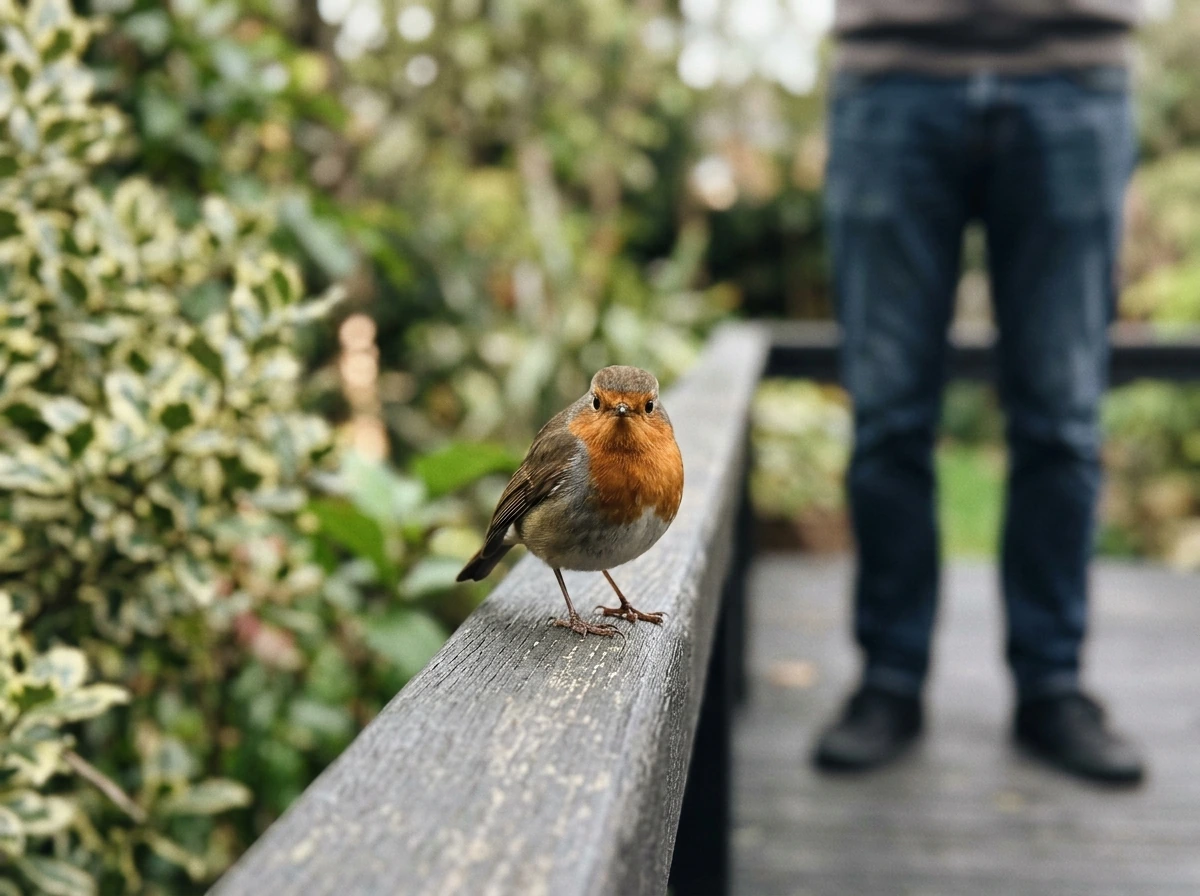
The 'fever dream bird' is a meme, not a species
nothing supernatural is happening. The 'fever dream bird' is an internet meme, not a real species or recognized wildlife phenomenon, so if you’re wondering whether a specific rare creature just looked at you and triggered something, the reality is that you encountered a regular bird doing regular bird things, and the meme framing made it feel weirder than it is. Know Your Meme categorizes it as exactly that: a meme. There is no bird species, no documented wildlife behavior, and no recognized ornithological or wildlife agency report tied to this name. If you arrived here wondering whether a specific rare creature just looked at you and triggered something, the reality is that you encountered a regular bird doing regular bird things, and the meme framing made it feel weirder than it is.
That said, the underlying question is genuinely useful. Birds do stare. Some species will lock eyes with a person for a sustained, uncomfortable amount of time. Some will approach closely or even dive at your head. Understanding why they do this, and what that behavior signals, is exactly what this article covers. It is also worth noting that questions about whether specific bird behaviors are real versus myth come up a lot on this site, and the answer almost always comes back to biology over legend.
If a bird is staring at you right now: quick safety checklist
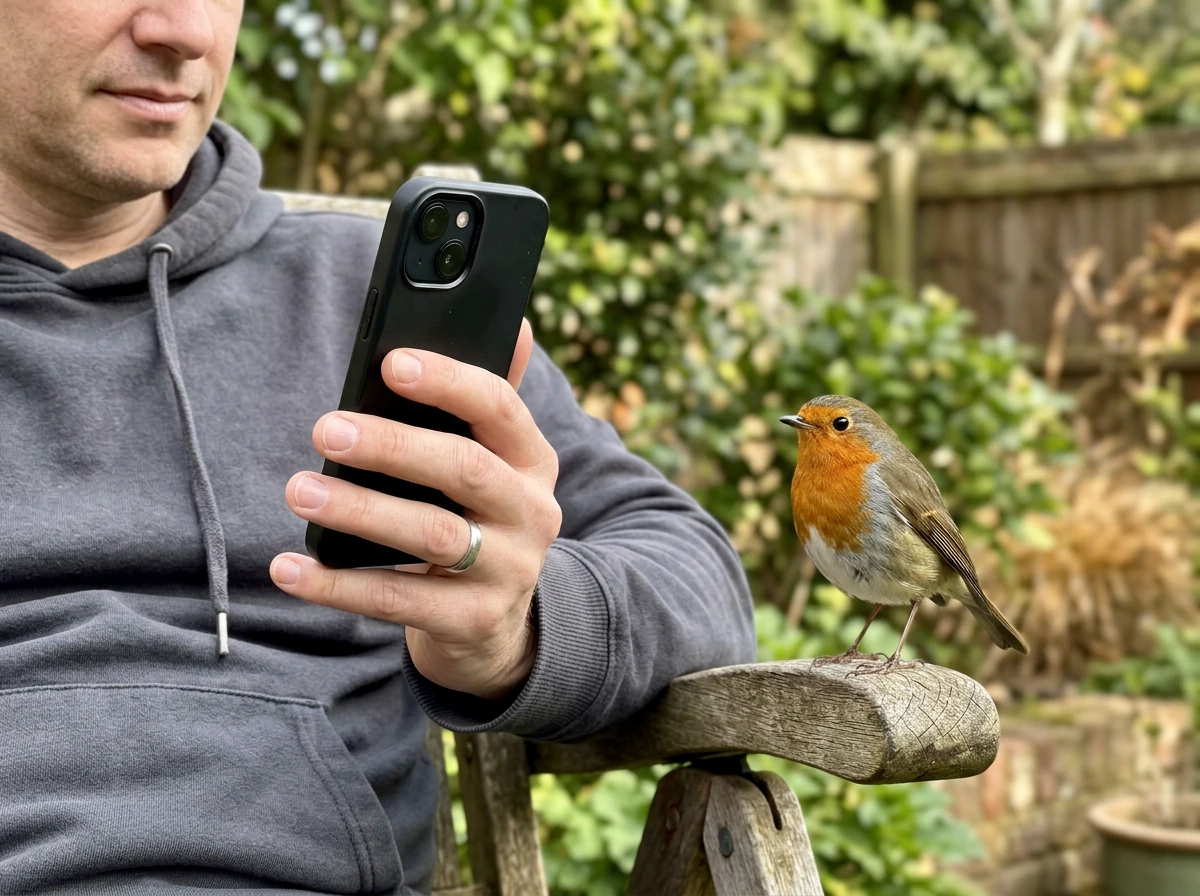
Before getting into the science, run through this checklist if you are in the moment. Most of these situations are benign, but a few require immediate action, don’t try anything like pointing a laser at birds, and instead focus on safe, non-harmful steps.
- Stop moving. Sudden movements escalate the bird's stress level and increase the chance of a defensive response.
- Assess your surroundings. Are you near a tree, a rooftop ledge, a beach, or a ground-level patch of grass? If yes, you may be close to a nest without knowing it.
- Check the bird's body language. Is it weaving back and forth, fluffing up, calling loudly, or flying short aggressive passes? Those are warning signs. A bird that is simply looking at you without moving aggressively is likely just curious.
- Do not make direct sustained eye contact with a threatening bird. Research on herring gulls shows that birds adjust their behavior based on where a human's gaze is directed. Averting your gaze can de-escalate.
- Do not run. If a bird is acting defensively, running triggers a chase response. Move away slowly and steadily.
- Cover your head if a swoop seems imminent. Use your bag, jacket, or arms. Do not wave, yell, or swat.
- Remove pets from the area immediately. A dog or cat near a nesting bird dramatically increases the bird's threat assessment.
- Do not feed the bird. Feeding leads to habituation and can create ongoing problems (more on that below).
- Once you are safely away, note the location. If you are near an airport, a managed wildlife area, or a public beach, report the behavior to airport management or local wildlife authorities.
Why birds stare at people: the actual biology
Birds are highly visual animals. Their eyes are positioned to give them wide fields of view, and many species are acutely sensitive to gaze direction, including yours. A study published in a peer-reviewed journal found that herring gulls actively respond to where a human is looking, taking longer to approach food when a person looks directly at them. Separate research documented that birds respond to predator eye-gaze direction as threat information. In short, eye contact is a real signal in the bird's world, and they are reading you just as much as you are noticing them. This includes misunderstandings like whether bird blindness is real.
There are four main behavioral reasons a bird might stare at or approach a person.
Curiosity
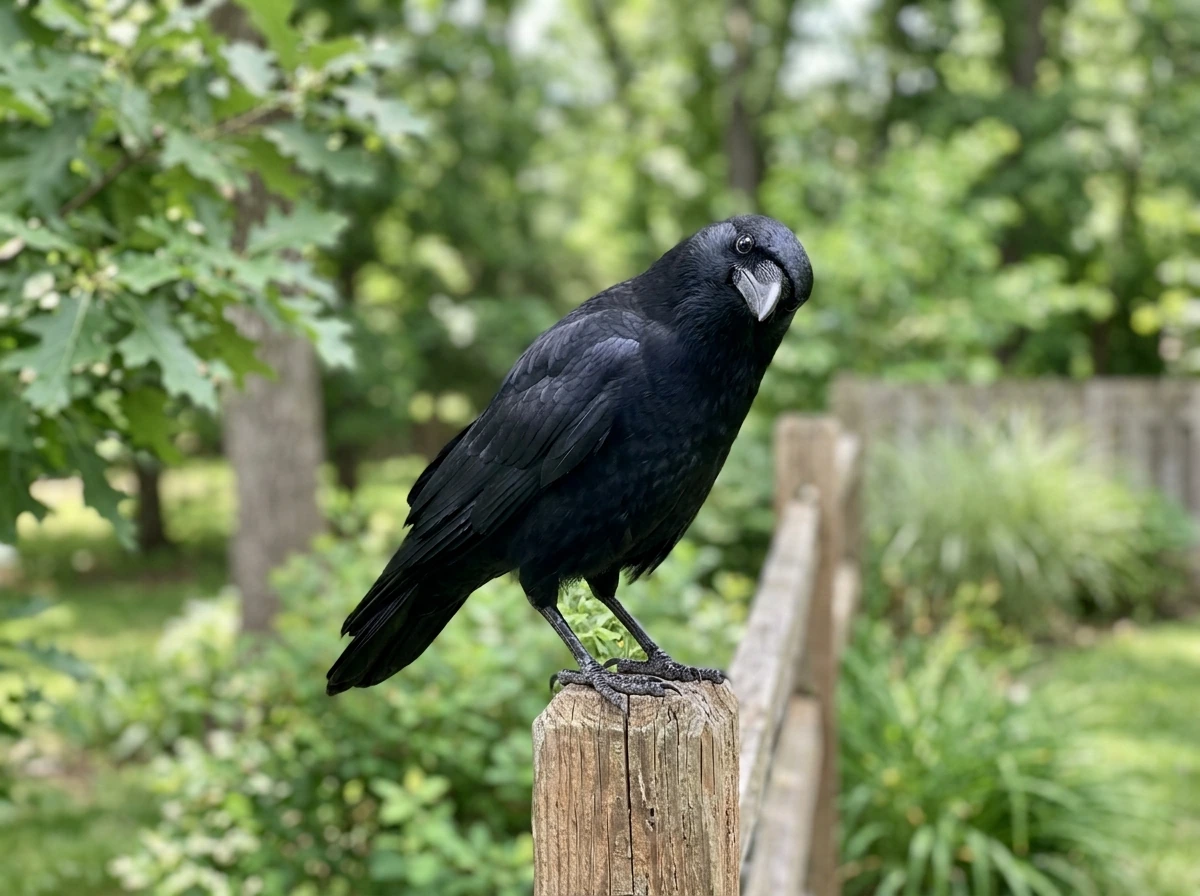
Many birds, especially corvids (crows, ravens, jays), mockingbirds, and some raptors, are genuinely curious about novel things in their environment. If you are sitting still, wearing something bright, or holding an unusual object, a bird may approach simply to assess what you are. This is the most common explanation for a bird appearing to stare. It looks intense because birds do not have the same facial expressions humans use to signal benign intent.
Territoriality
During breeding season, many species treat a wide radius around their territory as something to defend. The U.S. Fish and Wildlife Service specifically calls out northern mockingbirds and raptors as common sources of aggressive human encounters, precisely because they nest in and around human-populated areas. If a bird is staring you down from a fixed position, it may be asserting ownership of the space.
Nest defense
This is the highest-risk scenario. Audubon notes that breeding season is when birds are most vulnerable and therefore most defensive, and the U.S. Fish and Wildlife Service describes behaviors like anxious weaving and repeated passes as signs of nest-guarding aggression. Ground-nesting birds, like many shorebirds, are especially sensitive. The Florida Fish and Wildlife Conservation Commission recommends staying at least 500 feet from beach-nesting bird colonies, partly because eggs and chicks can be nearly invisible and are easily crushed, and partly because the birds' distress response to an approaching person is immediate and intense.
Reflection confusion
A less obvious but surprisingly common scenario: the bird is not staring at you. It is staring at itself. Environment and Climate Change Canada explains that during breeding season, birds frequently mistake their reflection in windows or glass for a rival bird. This produces sustained, agitated approach behavior that looks alarming from a human's perspective but is actually the bird fighting its own image. If this is happening near a window on your property, the fix is straightforward: break up the reflection with tape strips, window decals, or external screens.
Curious bird vs. real threat: how to tell the difference
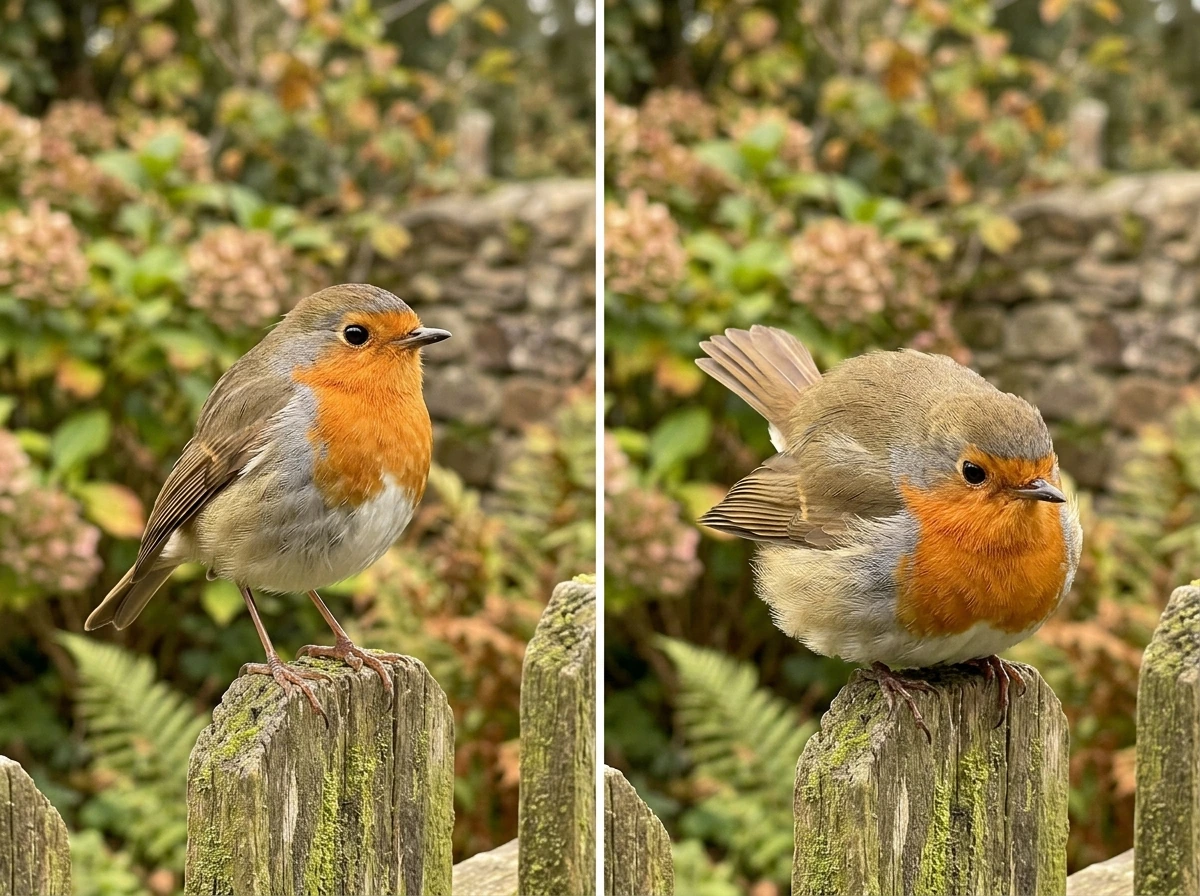
The distinction matters because the right response differs. Here is a practical breakdown of the signals.
| Signal | Likely curiosity | Likely threat or stress |
|---|---|---|
| Body posture | Relaxed, upright, head tilting | Fluffed feathers, crouched, weaving back and forth |
| Movement | Stationary or slow hop toward you | Short repeated passes, dive-bomb approach, circling overhead |
| Vocalization | Quiet or normal calls | Loud alarm calls, repetitive scolding, aggressive chattering |
| Context | Open area, no visible nest nearby | Near trees, ledges, ground vegetation, beach nesting zones |
| Season | Any time of year | Spring and summer (breeding season) dramatically increases risk |
| Response to your movement | Retreats or loses interest if you move | Follows you or escalates aggression as you move away |
One scenario that can look harmless but is actually a hazard: a bird that does not move at all when you approach a building or window. Canada's wildlife guidance flags this as a potential sign of injury or concussion from a window strike. A bird that is frozen and unresponsive is not being bold or curious. It may be incapacitated and should be treated as an injured animal, meaning you should contact a local wildlife rehabilitator rather than trying to handle it yourself.
What to do step by step when a bird approaches or stares
Work through these steps in order, depending on how the encounter is developing.
- Stay calm and stop moving. Stillness lowers your threat profile. A bird that is assessing you needs a moment to decide you are not a predator.
- Avert your gaze slightly. Direct sustained eye contact can register as a challenge or threat to some species. Look toward the bird without locking eyes directly.
- Back away slowly and in a straight line. Do not run, do not turn your back quickly, and do not make sudden gestures. Move with steady, deliberate steps until you have created clear distance.
- If a swoop happens, cover the top of your head and face with your arms or a bag. Keep moving away. Wildlife Victoria advises not waving, yelling, or retaliating, as these responses escalate rather than end the encounter.
- Once you are at a safe distance, do not go back the same way if you can help it. Take a different route while the bird is in active nesting or defense mode.
- Do not attempt to handle, corner, or capture the bird. This escalates almost every situation.
- Do not feed it. Even if the bird seems friendly and curious, feeding is the fastest way to create a habituated bird that repeatedly approaches people, which can ultimately result in the bird being euthanized. The USDA APHIS explicitly states that wildlife that becomes too aggressive due to feeding may have to be destroyed to protect people and property.
- Report the encounter if it happened near an airport, public beach, or managed wildlife area. For airports, contact airport management and, if applicable, file an FAA wildlife strike report.
Preventing future close encounters with birds
For everyday environments
Most repeat encounters happen because a bird has decided a person or location is a resource worth defending or returning to. Once you understand the trigger, prevention is straightforward. During breeding season, roughly spring through midsummer in North America, pay attention to bird alarm calls when you enter green spaces, beachfronts, or wooded areas. If birds start calling aggressively as you approach, assume a nest is nearby and reroute. Audubon frames this clearly: the human behavior of getting too close, even without malicious intent, is what creates the distraction and danger for birds. Staying aware of your surroundings protects both you and the bird.
For window reflection problems, break up the reflective surface on the outside of the glass. External tape strips, window films, and mesh screens all work. The key is that the deterrent needs to be on the exterior surface, because the reflection is what the bird is reacting to, not the interior.
Keep pets leashed in areas known to have nesting birds. The Florida Fish and Wildlife Conservation Commission is direct on this point: never bring a dog near a shorebird colony. Dogs trigger an intense defensive response even at distances that might seem safe to a person.
For aviation and professional contexts
Bird strikes at airports are a well-documented hazard. The NBAA reports the FAA receives more than 10,000 wildlife strike reports annually, and that number likely represents only about half of all actual strikes. The FAA's guidance on airport planning is clear: wildlife attractants on or near airport grounds need to be identified and mitigated. This means managing standing water, vegetation height, and food waste that could draw birds to the vicinity of runways.
For pilots, the FAA's Aeronautical Information Manual specifically flags areas near charted wildlife refuges, parks, and natural areas as zones with elevated bird concentration and corresponding hazard potential. If you encounter birds on or near a runway, the AOPA recommendation is to contact airport management immediately and complete an FAA wildlife strike report. The ICAO has also produced structured wildlife hazard management guidance emphasizing that effective hazard reduction requires an organized program, not ad hoc responses. Airports with significant wildlife hazard concerns typically work with Qualified Airport Wildlife Biologists as recognized by FAA and USDA APHIS standards.
The bottom line on bird eye contact
When a bird looks at you, it is not a bad omen, a supernatural event, or a 'fever dream' creature doing something inexplicable. It is an animal reading its environment, and you are part of that environment. The behavior means one of a handful of things: curiosity, territory defense, nest protection, or reflection confusion. None of those are inherently dangerous if you respond correctly. When a bird looks at you, it is not a bad omen, a supernatural event, or a 'fever dream' creature doing something inexplicable. Back away calmly, don't feed the bird, protect your pets, and cover your head if a swoop is coming. USDA APHIS also warns that feeding wildlife can create public safety problems, and that animals that become too aggressive may have to be destroyed to protect people and property don’t feed the bird. The vast majority of these encounters end without incident the moment you give the bird the space it is asking for.
The cases where eye contact or approach actually signals risk are specific and readable: breeding season, obvious nesting sites nearby, escalating alarm calls, and repeated aggressive passes. Treat those signs seriously. In any other context, a bird staring at you is about as threatening as it stares at you, assesses you as not a predator, and goes back to its day. Which is exactly what will happen if you handle the encounter the right way.
FAQ
If a bird keeps locking eyes with me, should I stare back or make sudden movements to scare it away?
Don’t. Prolonged eye contact can look like a challenge to some species, and sudden movements can trigger a defensive response. Instead, turn your body slightly away, slow your pace, and back off at an angle while keeping an eye out for escalating behavior like repeated passes.
What does it mean if the bird follows me for a while after I back away?
Following can mean it is guarding a resource, a nest area, or reacting to your presence as a persistent threat. If the bird’s behavior intensifies (closer approach, anxious weaving, or repeated dives), increase distance immediately and reroute, especially during breeding season.
Is it safe to feed the bird, even if it seems curious and won’t leave me alone?
No. Feeding reinforces the bird’s association of you with food, which can increase repeat visits and aggression. If you want it to leave, stop interacting, remove any attractants (including unsecured trash), and give it space.
How far away is “far enough” during breeding season if I’m near a nest or ground-nesting birds?
Use a conservative buffer and watch for escalation. For beach-nesting birds, the article cites a 500-foot distance from colonies as a practical guideline. If you are not sure you are at a colony, treat repeated aggressive behavior as the cue to move farther and quickly.
What should I do if a bird acts aggressive but I can’t tell whether it’s nesting or injured?
Look for responsiveness and movement. If the bird is frozen and unresponsive, treat it as possibly injured from a window strike and contact a local wildlife rehabilitator. If it is active and follows a defensive pattern (staring from a fixed spot, anxious weaving, or repeated passes), treat it as nest-related and increase distance.
If the bird is near my window, how can I tell whether it’s fighting its reflection versus something else?
Reflection-related encounters often happen near glass and stay consistent in the exact window area. If the bird repeatedly approaches and reacts exactly to your position relative to the window, it’s likely reflection confusion, and breaking up the reflection on the exterior should help.
My dog is leashed, but the bird is still dive-bombing us. Do I just wait it out?
Don’t wait if dive behavior is escalating. Move your dog farther away from the area, keep the leash controlled, and change your route if needed. Leashed dogs can still trigger a strong defensive response near nesting birds, particularly around shorelines and colonies.
Can I remove the bird from my yard or push it away from my property?
Avoid direct contact or handling. For a defensive or nesting bird, the safer approach is to back away, keep people and pets out of the area, and remove attractants (like open food or standing water) only if you can do so without approaching the bird closely.
What if the bird swoops toward my head, but I have something in my hands (phone, bag, stroller)?
Prioritize protecting your head and face. Cover your head with your arms or the closest safe item, keep moving steadily away, and don’t swing at the bird. If you’re with kids or a stroller, move to the side and increase distance rather than stopping to investigate.
If I had to leave quickly and the bird seems injured afterward, who should I contact and what should I tell them?
Contact a local wildlife rehabilitator or appropriate animal/wildlife service. Tell them where the bird was found (including whether it hit a window), whether it is responsive or breathing normally, and the approximate time the situation started, so they can advise next steps.
Are there any situations where I should treat bird behavior as an emergency for people?
Yes. If repeated aggressive passes are happening right over a pathway you cannot avoid (like a doorway or parking area), or if you have close, repeated dive attempts occurring near ground-nesting sites, treat it as urgent for your route and safety. Create distance immediately and keep others away until the bird calms or you can reroute.