A bird landing on a branch near you is not a sign of trust. Bird flock-level coordination and landing decisions can emerge as a group cohesion or navigation phenomenon in time and space, even under perturbations, rather than reflecting any single bird’s attitude toward a person Flock-level behavior can involve coordinated turning and landing decisions. It is almost certainly a sign that the branch met whatever immediate need the bird had at that moment, whether that was a clear sightline, a shaded perch, a spot to digest food, or a convenient waypoint on its route. 'Trust' is a human-relational concept that ethologists do not use as a measurable category in bird behavior research. What researchers actually measure is something more concrete and more useful: flight-initiation distance (FID), the distance at which a bird flees when an intruder approaches. That number tells you far more about how a bird feels about your presence than where it chose to land.
If a Bird Lands on a Branch, Does It Trust?

What landing behavior really means
When a bird lands on a branch, it is running a fast cost-benefit calculation driven by habitat features and immediate safety, not by any emotional assessment of you as an individual. The reality is that birds are not evaluating whether you are trustworthy the way a dog or a person might. They are asking: 'Is this perch usable right now? Is the threat level low enough to tolerate this spot?' Research on bird tolerance of humans consistently shows that whether a bird stays or flees near a person is context-dependent, shaped heavily by the bird's exposure to human activity over time and by the specific conditions in that moment. An urban house sparrow has a much shorter FID near foot traffic than a forest thrush does, not because the sparrow has developed affection for people, but because repeated, non-harmful exposure has recalibrated its risk threshold downward.
Landing within your field of view means the bird assessed the landing spot as acceptable given the perceived risk at that moment. It does not mean the bird has any positive feeling toward you. It also does not mean the bird is indifferent to you; it may be monitoring you actively the entire time it sits there. The two outcomes, trust and tolerable risk, look identical from the outside unless you know what body language to watch for.
Why birds land on branches in the first place
There are several practical reasons a bird picks a particular perch, and very few of them have anything to do with whatever is standing nearby.
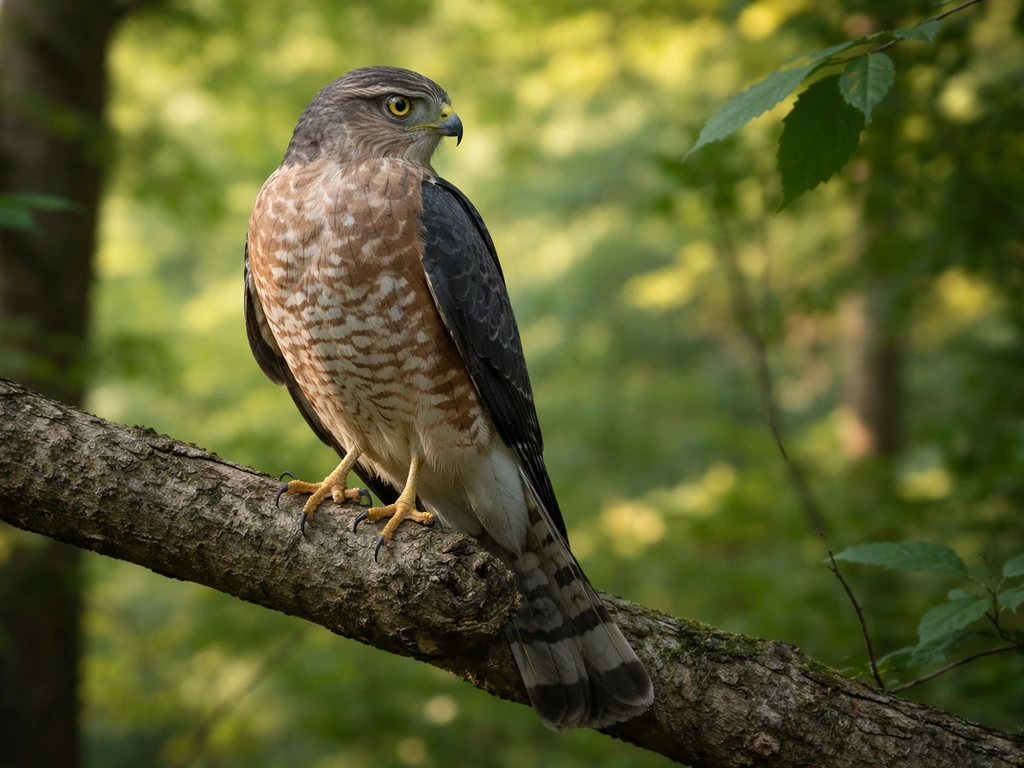
- Feeding and foraging: Many species use elevated perches as hunting platforms. Red-tailed hawks, for example, routinely select utility pole crossbeams around 6 meters high as winter lookout perches specifically to scan for prey below.
- Resting and thermoregulation: At ambient temperatures above roughly 35°C, songbirds shift to higher, shadier perches to avoid heat load, and in cooler conditions they actively seek sun exposure to reduce metabolic costs. Only about 1% of perch selections in extreme heat involve sun exposure, compared to much higher rates when it is cool. A bird settling on a branch may simply be managing its body temperature.
- Scouting and navigation: Raptors and soaring birds like vultures use elevated perches between thermal-soaring bouts to rest and scan terrain. A branch landing can be a navigation checkpoint, not a destination.
- Social and flock coordination: In flocks, landing decisions are partly collective. Groups coordinate arrival timing and spacing, so several birds landing near each other reflects group cohesion rather than individual attitudes toward the environment or toward you.
- Digestion and post-meal rest: Many birds sit quietly after feeding to process a meal. A motionless bird on a branch may simply be resting its digestive system.
Trust versus indifference versus risk assessment
These three states are genuinely different and produce different behavioral signatures. The cleanest way to tell them apart is to pay attention to two things: what happens when you move, and how the bird's head is oriented and moving while it sits.
Flight-initiation distance is your best diagnostic tool as an observer. A bird that lets you approach to within a meter or two before flying away has a low FID. That low FID is more informative than the initial landing, and it reflects either genuine habituation (the bird has learned humans in this location are not a threat) or a risk tradeoff (the cost of abandoning the perch outweighs the perceived risk of staying). A high FID means the bird flushed as soon as you moved or got closer, which indicates the landing was already a borderline decision. Neither of these is 'trust' in the way we use the word, but habituation with a low FID is the closest behavioral equivalent.
Indifference is relatively rare in wild birds around humans. What looks like indifference is usually either high tolerance through habituation or active, efficient monitoring that is hard to detect. Research on vigilance behavior shows that head-turning type, not just whether the head is up or down, reveals a lot about perceived threat level. A bird doing rapid lateral head turns is likely actively threat-scanning, not relaxed. That is not indifference; it is quiet risk assessment.
Reading body language: comfort, curiosity, stress, and threat
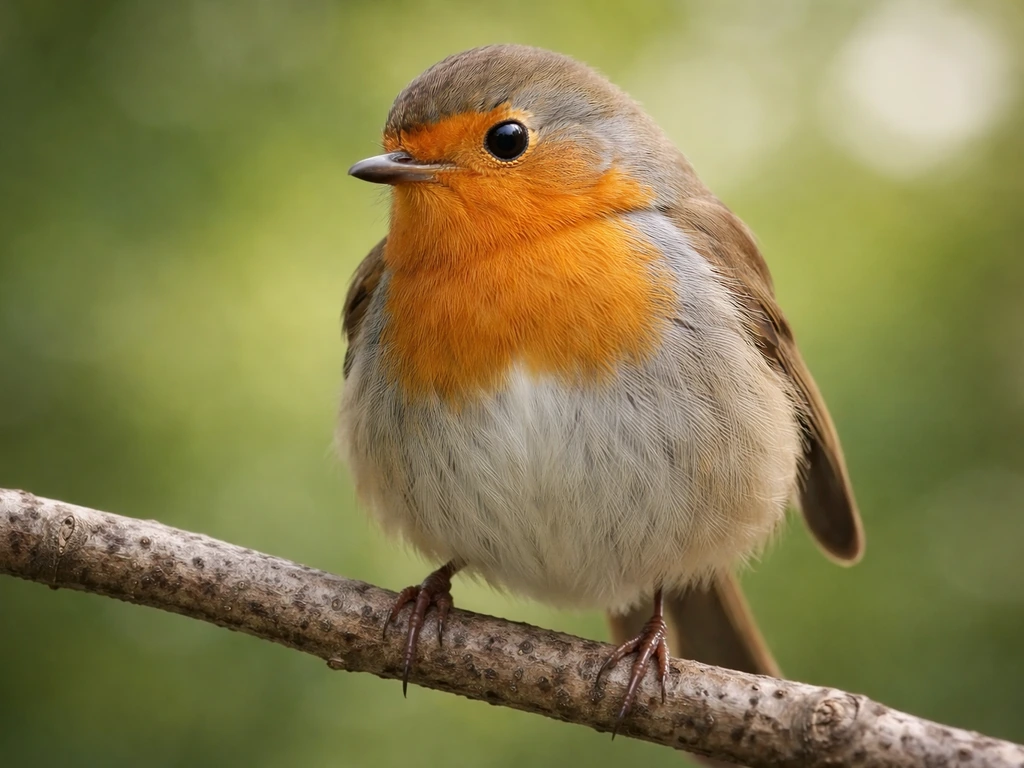
Once a bird has landed, its posture and movement patterns give you a fairly reliable window into what it is experiencing. Here is what to watch for across the main behavioral states.
| State | Posture cues | Movement/vocalization cues |
|---|---|---|
| Comfort/relaxed | Feathers slightly fluffed, body low on perch, one leg may be tucked up | Minimal head movement, quiet or soft contact calls, slow preening movements |
| Curious/alert | Upright posture, feathers smooth and sleek, head tilted or cocked toward you | Frequent but unhurried head turns, may vocalize with short chips, does not flush when you shift weight |
| Stressed/wary | Elongated, tense posture, feathers sleeked tight to body | Rapid, repeated lateral head turns, alarm calls, crouched and ready-to-launch stance, high FID if you move |
| Threat display | Body held upright and expanded to appear larger, wings may be partially spread or fanned, tail fanned | Head bobbing, repeated alarm or threat vocalizations, may lunge or swoop if nest nearby |
A few clarifications worth making: head bobbing is often mistaken for friendly behavior because we associate bobbing with excitement or greeting in social mammals. In many bird species, repetitive head movements in a threat context are alerting and warning behaviors, not comfort signals. Similarly, puffed feathers look relaxed but can also appear during illness, so a bird that looks 'cozy' on a branch but is unresponsive to your approach may be sick rather than trusting.
Vocalizations are also highly context-specific. Short, sharp alarm calls (high-pitched 'seeet' calls in many songbirds) indicate the bird perceives a threat. Soft, repeated chips or trills usually indicate contact or foraging calls and suggest lower stress. Silence combined with a rigid posture often precedes a flush.
When a landing bird is actually a concern
For most casual observers, a bird on a nearby branch requires no action at all. However, there are specific contexts where a landing bird is a real practical concern, and it helps to know which category you are in.
Around pets
If you have outdoor cats, small dogs, or backyard poultry, a bird landing nearby can signal interest in your animals (in the case of raptors), or it can mean your animals are attracting birds through food scraps. Raptors like red-tailed hawks occasionally target small mammals and poultry. If a hawk is perching repeatedly on branches overlooking your pet area, that is scouting behavior, not curiosity about you. Secure small pets during daylight hours if raptors are regularly present.
Near buildings and people
Certain species (mockingbirds, red-winged blackbirds, and some corvids) will land on branches near humans during nesting season specifically to perform threat displays and, if those fail, to swoop. If a bird is landing on nearby branches and performing threat-posture behavior (fanned tail, upright stance, loud alarm calls, direct eye contact), it almost certainly has a nest nearby and considers you a threat to it. The U.S. Fish and Wildlife Service advises not attempting to handle or interfere with nesting wild birds; permits are required for nest removal and nuisance complaints generally do not qualify. The safest response is to reroute around the area for the few weeks the nesting period lasts.
Health and disease risk
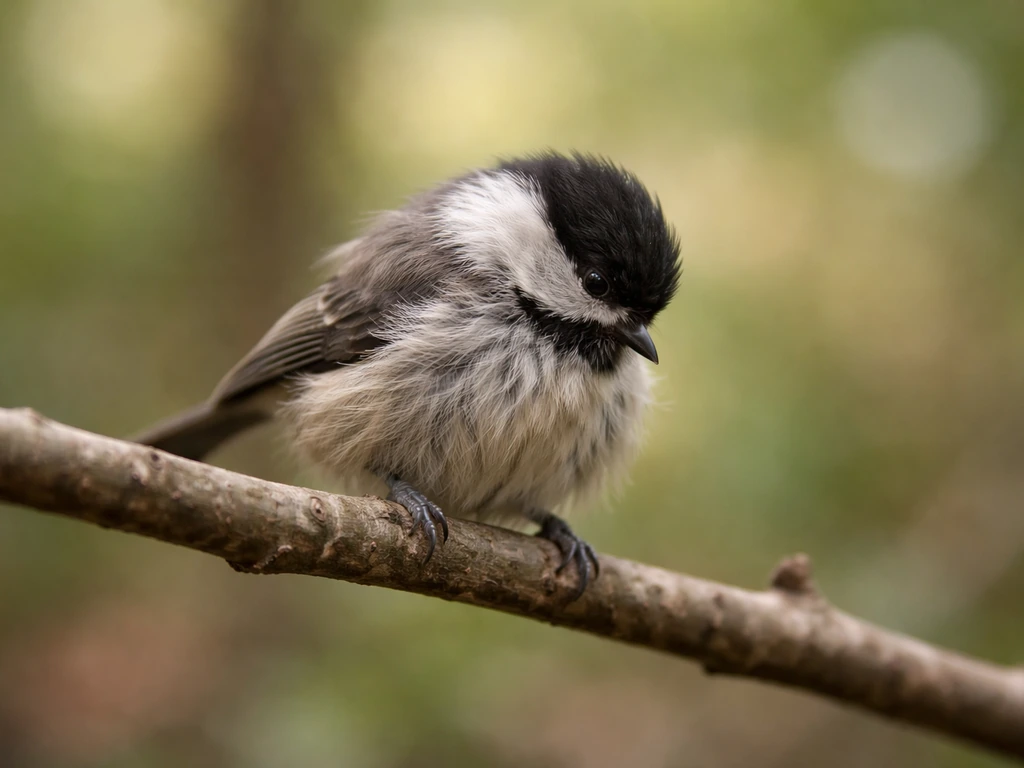
A bird landing unusually close, especially one that appears fluffed, unsteady, or unresponsive, may be sick rather than trusting. CDC guidance is unambiguous here: do not touch wild birds. If you are worried about illness or disease risk, the safest rule of thumb is to avoid touching the bird and contact local wildlife guidance instead do not touch wild birds. Avian influenza, avian botulism, and other pathogens can be transmitted through contact with sick or dead birds and contaminated surfaces. If you encounter a bird that seems ill, do not handle it. If you see advice about should you touch bird feathers, treat it as a separate handling risk question and follow the same do not handle guidance when a bird seems ill. In general, it is not safe to touch a bird, especially if it looks sick or unsteady is it safe to touch a bird. Wash your hands after any contact with bird feeders, baths, or droppings, regardless of whether the birds appeared healthy.
Aviation and operational contexts
If you work at or near an airport, birds on or near runways and taxiways are a managed hazard, not a behavioral curiosity. Transport Canada estimates around 90% of bird and mammal strikes happen at or near airports. The FAA's approach centers on habitat management: controlling land use to remove food attractants, bird-proof storage of waste, and prohibiting wildlife feeding on airport grounds. If you observe birds on or near a runway, FAA guidance says to request that airport management disperse the wildlife before takeoff. Pilots should report any strikes using FAA Form 5200-7. The point of all this is that in an operational context, the question of whether birds 'trust' a location is irrelevant; what matters is removing the attractants and sightlines that make the location appealing to them in the first place.
Practical next steps depending on your goal
Your action plan depends entirely on what outcome you want. Here are the main scenarios and what actually works.
If you want birds to feel comfortable landing near you
- Stay still and move slowly. Abrupt movements spike perceived predation risk and increase FID. The more predictable your movements are, the faster habituation occurs.
- Avoid direct, sustained eye contact. Many birds interpret a direct forward-facing stare as a predator fixation. Watching from a 45-degree angle is less threatening.
- Do not approach the bird; let it approach proximity on its own terms. Each time you close the distance uninvited, you reset its tolerance threshold.
- Provide consistent food and water in a fixed location if you want to encourage regular visits. Consistency allows birds to build habitat-level familiarity with your space.
- Do not touch the bird. Physical contact is not required for habituation and can transmit disease in both directions, aside from causing the bird acute stress.
If you want to read the bird without stressing it
- Watch posture first: tight, sleek feathers with a tense stance means the bird is already stressed by your presence, regardless of whether it has flown yet.
- Check head movement: slow, infrequent scans suggest lower threat perception; rapid lateral head turns suggest it is actively monitoring you as a potential risk.
- Note the distance and whether it changes: a bird that shuffles away from you along a branch or reorients to keep you in its lateral visual field is telling you it is wary.
- If it alarm-calls, give it more space. Alarm calls in many species also alert other birds and can affect the behavior of an entire local population around you.
If you want to reduce or deter landings
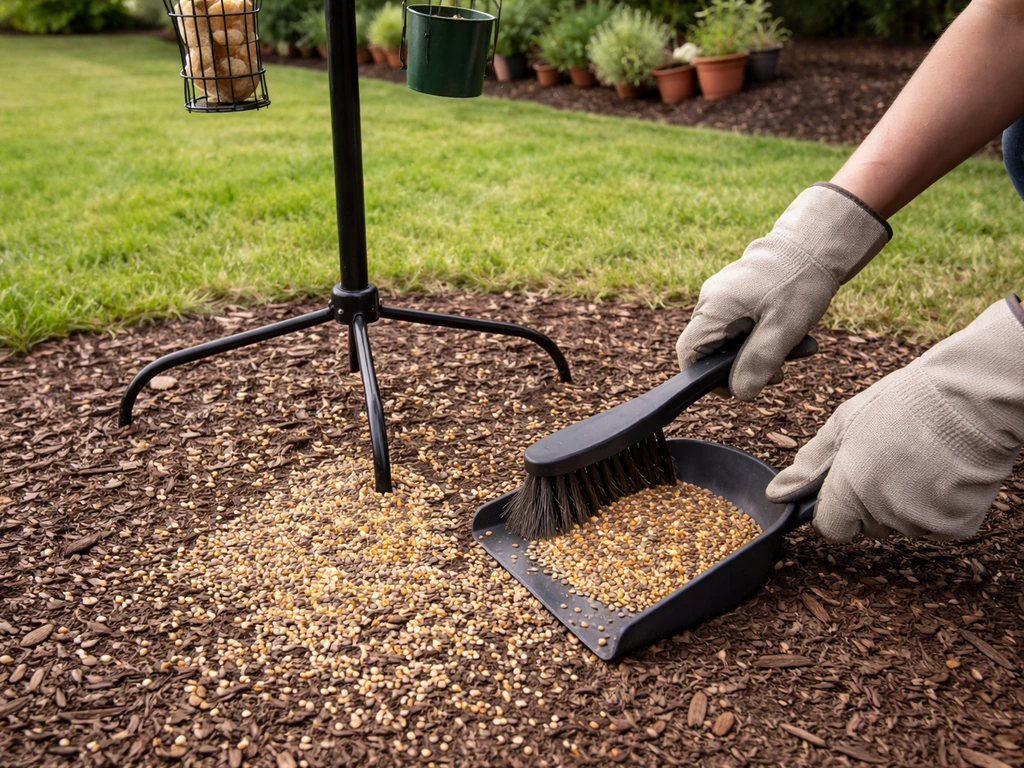
- Remove food attractants first. Bird-proof your garbage, remove fallen fruit, and clean up seed spillage from feeders. Food is the primary reason most perching birds return to a location.
- Install physical deterrents on preferred perch surfaces: bird spikes, sloped coverings, or reflective tape on ledges and branches reduce the utility of a perch without harming the birds.
- Introduce unpredictable disturbance near the perch site: motion-activated sprinklers or predator decoys (moved regularly so birds do not habituate to them) raise the perceived risk of the location.
- In airport or operational settings, follow your wildlife hazard management program's habitat-control protocols and report all strike incidents through the appropriate channels.
One final note: the same behavioral toolkit that helps you interpret whether a bird trusts a perch near you also applies when you are thinking about whether to touch a bird, approach a nest, or handle feathers you have found. Wild birds operate on risk assessment, not sentiment. Understanding that, and working with it rather than against it, is what actually leads to safer and more rewarding interactions for both sides.
FAQ
If a bird keeps coming back to the same branch near me, does that mean it trusts me?
Not necessarily. Returning to the same perch usually means the site offers reliable resources (shade, vantage point, food access) and the bird has adjusted its risk threshold based on your consistent behavior. A better sign to watch is whether its flight-initiation distance stays low even when you change your pace or posture, that helps distinguish habituation from a one-off safe moment.
How close is “too close” to test whether a bird is tolerant?
Avoid doing targeted “tests” like stepping closer until it flushes. Instead, observe from a distance and note how it responds to changes you already cause (walking, opening a door, moving your arms). If it flushes at unusually short distances, keep your movement slower, increase your distance, and leave the area rather than repeatedly approaching to confirm a pattern.
What if the bird lands nearby but does not watch me at all, is that real indifference?
It could be a short feeding or rest window, or it could still be scanning without obvious head movement. Use body cues together: if the bird remains rigid with minimal foraging, that can precede a flush even if it looks calm. If it resumes normal behaviors like preening, picking at food, or relaxed stepping, perceived threat is likely lower at that moment.
Does a bird fluffed up on a branch always mean it is sick?
No, fluffing can also happen during thermoregulation (warming or cooling) or sleep. The key difference is responsiveness and stability: an unsteady stance, inability to right itself, repeated sudden collapse, or lack of normal alert head movements suggests illness and is a reason to stay away and follow local wildlife guidance.
If I give the bird space and it stays, should I move away slowly or suddenly?
Move away calmly and predictably. Sudden changes (fast turning, sprinting, waving) can register as a sudden threat stimulus and trigger a flush regardless of prior tolerance. If you need to pass nearby, keep your trajectory smooth, lower your profile when possible, and create distance until the bird resumes normal feeding or resting.
What body language specifically signals the bird is escalating toward a threat display?
Look for upright posture with increased stillness, fanned tail or raised feathers, direct sustained eye contact, and sharp alarm calls. If the bird starts making those cues while staying in a prominent position, treat it as an elevated-risk moment, especially in nesting season.
If the bird is silent but stiff, what does that usually mean?
Silence combined with rigid posture often indicates heightened caution. The bird may be waiting for the threat to pass or may be preparing to flush. The practical cue is how it reacts to your normal movements, walking toward it or suddenly raising your arms is more likely to trigger escape than a quiet, gradual retreat.
Should I feed birds near my home if I do not want them to land close to pets or people?
Feeding is one of the most common ways to increase how close birds will tolerate being. If you want fewer close landings, remove attractants, avoid leaving pet food outside, and manage waste sources. Instead of feeders, use targeted, contained bird-safe practices like covered trash and cleaning up dropped seed.
Are there species or situations where landing near humans is especially risky?
Yes. Nesting-season threat displays are a major category, and repeated perching that overlooks pet areas can be scouting by raptors. Also, birds near airports are a managed hazard where reporting and habitat controls matter more than interpreting behavior.
What should I do if a bird appears injured after landing near me?
Do not touch it. Keep people and pets back, note the location, and contact local wildlife rehabilitation or animal control for guidance. Even if it seems tame, injury often comes with unpredictable responses, and you reduce both disease risk and the chance of further harm.