
Touching a bird is generally low risk for healthy adults who handle a healthy bird briefly and wash their hands thoroughly afterward. The real answer, though, depends on the species, the bird's health status, your own immune status, how you touch it, and what you do immediately after. A few genuine hazards exist: bacterial infections from bites and scratches, zoonotic diseases like salmonella and psittacosis, and real welfare costs to the bird from stress and feather damage. But the folk belief that a single touch will get you killed by avian flu, or that a parent will abandon chicks because you brushed the nest, simply is not supported by evidence. The risks are manageable once you understand what they actually are.
Is It Safe to Touch a Bird? Evidence Guide for Owners & Aviation

Marcus Whitmore
12 Jul 2026
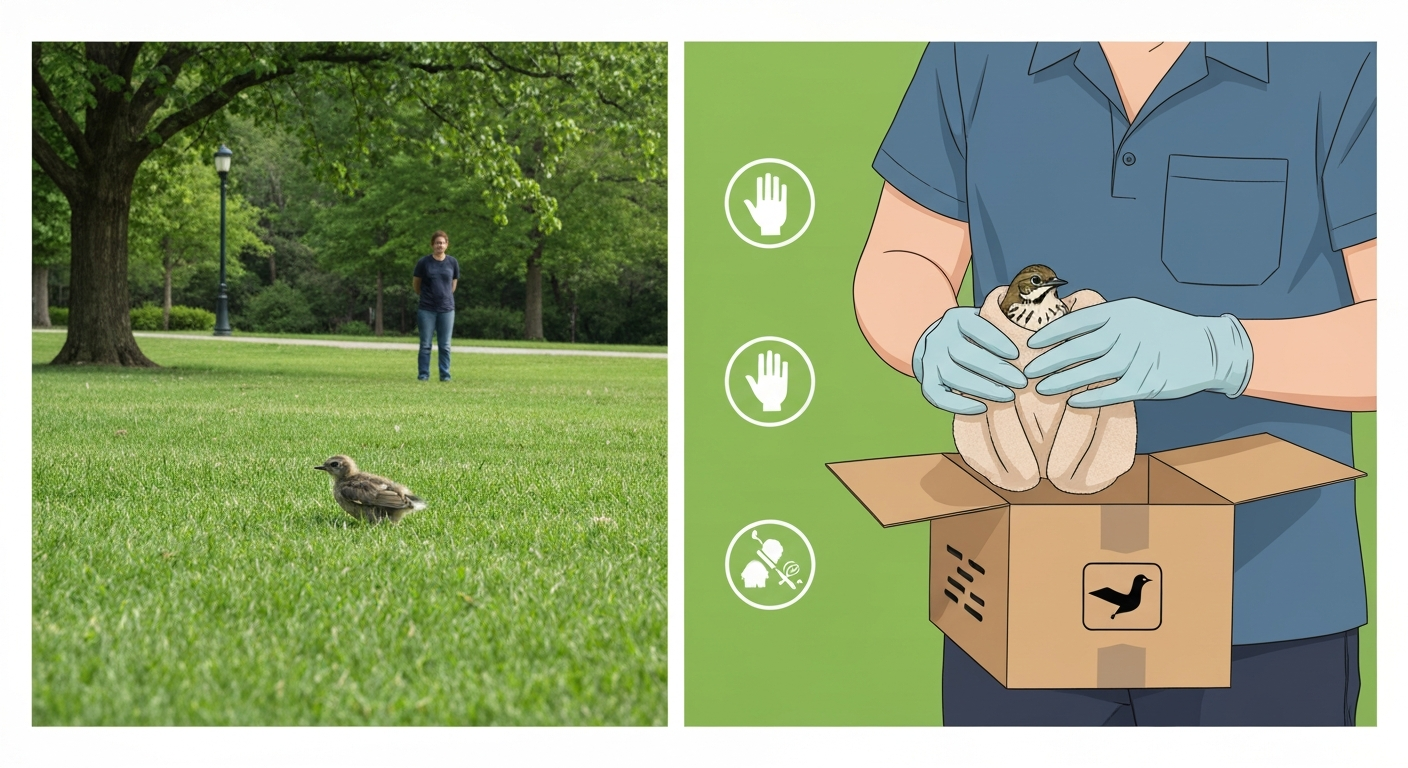
The evidence in brief
Here is what the science actually says. Avian influenza transmission to humans requires close or prolonged contact with infected birds or their contaminated environments, and casual contact with apparently healthy birds carries low risk according to both WHO and CDC guidance. Psittacosis (Chlamydia psittaci) is spread mainly by inhaling dried dust from secretions and droppings, not simply by skin-to-skin contact, though handling infected birds in poorly ventilated spaces raises exposure risk considerably. Salmonella from live poultry is a real and documented hazard, particularly for children under five, older adults, and immunocompromised people; CDC has tracked multistate outbreaks tied specifically to backyard chicks and ducklings. Bird bites carry bacterial pathogens including Pasteurella multocida, which can progress to serious deep-tissue infections rapidly in the hand. Birds do not carry rabies, so that concern is off the table entirely. On the bird welfare side, handling raises corticosterone levels, alters heart rate and respiratory rate, and can permanently damage feather microstructure, especially in waterbirds.
Should you touch this bird right now? A quick decision checklist
Work through these questions in order before you reach for any bird, wild or domestic.
- Is touching necessary? If the bird is healthy and in no danger, the safest answer for both of you is to leave it alone. A fledgling sitting on the ground is usually normal, not abandoned.
- Is the bird sick, dead, or showing signs of avian influenza (mass die-off nearby, neurological symptoms)? If yes, do not touch it with bare hands. Contact your state wildlife agency or local animal control instead.
- Do you have a respiratory illness, open wounds, or a compromised immune system? If yes, step back and let someone else handle it, or use full PPE.
- Are you handling backyard poultry chicks or ducklings? Treat every contact as a potential Salmonella exposure. Gloves, hand-washing after, and keep children under five away.
- Is this a wild bird that needs rescue? Minimize handling time, use a towel or thick gloves, place it in a ventilated box, and call a licensed wildlife rehabilitator before doing anything else.
- Is this a captive pet bird you know well? Routine handling with clean hands is generally fine; watch for bite risk, especially with larger psittacines.
- Did you have any contact? Wash hands immediately and thoroughly with soap and water for at least 20 seconds regardless of how brief the contact was.
Who this guide is for
This article is written for four distinct groups, each of whom faces a different version of the question. Pet owners handling parrots, chickens, ducks, or finches daily need to understand the low-but-real bacterial and zoonotic risks of routine contact. Researchers and wildlife rehabilitators who handle wild birds professionally need to know the occupational-health baseline: what PPE is actually necessary, what surveillance is recommended, and what constitutes a reportable exposure. Bystanders who find an injured, grounded, or apparently dead bird need quick, practical guidance on whether to intervene and how to do so without making things worse. Aviation and airfield professionals occasionally handle bird carcasses after strike events; their exposure risks and documentation obligations are distinct from casual contact. The evidence base behind each recommendation differs by context, so where something applies only to one group, that is made explicit.
What happens to you when you touch a bird
For most people, touching a healthy bird briefly and then washing their hands produces no health effect at all. The immediate physical consequences are minor: mild skin contact with feathers, dander, or any surface bacteria the bird is carrying. The relevant biology is that birds shed bacteria, fungi, and viruses in their droppings, feather dust, saliva, and nasal secretions, not reliably through the feathers themselves, so the route of exposure matters enormously. Simply stroking a bird's back poses far less risk than cleaning a cage, handling droppings, or being bitten.
A bite is a different category of event. Parrot and psittacine bites in particular can be deep and crushing; case series in hand surgery literature describe infections that required surgical debridement and intravenous antibiotics because Pasteurella multocida progresses quickly in closed-space hand anatomy. Even small birds can break skin with surprising force. A scratch from a talon is lower risk than a bite but still warrants prompt wound care. The practical takeaway: birds are not venomous, they do not carry rabies, but a bite to the hand from a large parrot or a raptor is a genuine medical event, not something to shrug off.
What happens to the bird when you touch it
This is where the human intuition of 'it's just a gentle touch' runs into real biology. Handling triggers an acute stress response in birds: restraint measurably elevates corticosterone (the avian stress hormone), increases heart rate and respiratory rate, and raises cloacal temperature. Research on raptors specifically found these physiological changes during manual restraint, and that hooding the bird reduced the stress response, which is why experienced handlers cover the bird's eyes. In a healthy adult bird handled briefly by a competent person, these changes are transient. But in a sick, injured, debilitated, or very young bird, the same stress response can tip the animal into cardiovascular collapse.
Feather integrity is a separate concern that is often overlooked. Feathers are not just decoration; they are precisely structured for flight, insulation, and waterproofing. Handling disrupts the barbule microstructure that gives feathers their interlocking surface. For waterbirds especially, this is not trivial: damaged feather microstructure degrades water-repellent properties, which can lead to hypothermia in cold or wet conditions. Oils transferred from human skin also alter feather function. This is part of why wildlife rehabilitators are so deliberate about minimizing unnecessary contact, and why the myth that a parent will abandon a touched chick, while exaggerated, has a partial biological truth embedded in it: human scent and handling do create some disruption, even if abandonment is not the typical outcome. For more detail on whether a bird will abandon its nest if you touch it, see guidance on will a bird abandon its nest if you touch it. See a related discussion on whether a bird's landing or brief contact implies trust (if a bird lands on a branch does it trust) for more on interpreting avian behavior. The question of whether touching eggs or chicks causes abandonment is explored in more depth in a related article on whether birds abandon their nests if you touch them.
There is also the disease transmission risk running in the other direction. Humans can pass pathogens to birds. People with respiratory infections can potentially transmit viral and bacterial agents to captive birds, particularly in enclosed spaces. Handling chicks with unclean hands or equipment can introduce pathogens into a nest or brooder. For breeders and rehabilitators, biosecurity is a two-way concern.
Human health risks in detail
Bites and scratches
The primary risk from a bird bite is bacterial infection from oral flora, particularly Pasteurella multocida. This organism is notably aggressive in hand wounds: infections can produce rapidly spreading cellulitis, tenosynovitis, or septic arthritis within 24 to 48 hours. Standard bite-wound management guidance recommends prompt and thorough wound irrigation, assessment for deep-structure involvement (especially if the bite is over a joint), a tetanus update if not current, and amoxicillin-clavulanate as first-line oral antibiotic prophylaxis for wounds considered at high risk of infection. Nontuberculous mycobacteria have also been reported in parrot bite infections. Talon scratches from raptors can introduce bacteria from prey carcasses carried on the talons, so the same irrigation-and-assess protocol applies.
Salmonella
Salmonella is the most consistently documented zoonotic hazard from live poultry contact. CDC has tracked multiple multistate outbreaks tied to backyard chickens and ducklings over several decades, with baby poultry (especially chicks and ducklings) disproportionately implicated. CDC documents multistate Salmonella outbreaks tied to backyard poultry, including chicks and ducklings (Salmonella Outbreaks Linked to Backyard Poultry (example CDC outbreak page)). The transmission route is fecal-oral: you touch a bird or its contaminated environment, and bacteria get to your mouth via unwashed hands, shared food, or contact with face surfaces. Incubation is typically 6 hours to 6 days; illness usually resolves in 4 to 7 days in healthy adults but can be severe or life-threatening in young children, older adults, and immunocompromised people. Stressors including transport and crowding increase Salmonella shedding from birds, which is why freshly arrived hatchery chicks pose elevated risk. CDC explicitly recommends that children under five, adults over 65, and immunocompromised individuals avoid handling live poultry.
Psittacosis
Psittacosis is caused by Chlamydia psittaci and affects people primarily through inhalation of aerosolized dried feces, feather dust, and respiratory secretions from infected birds, not through direct skin contact alone. Incubation is typically 5 to 14 days. In outbreak data, the clinical picture is serious: a 2024 systematic review and meta-analysis found pooled hospitalization rates of approximately 42%, pneumonia in around 60% of cases, and a pooled fatality rate of about 1.8%. These figures come from documented outbreaks, which tend to capture more severe cases, and overall incidence is likely underreported; however, the data make clear this is not a trivial infection. Parrots, cockatiels, parakeets, and other psittacines are the classic sources, but pigeons, poultry, and wild birds can also carry C. psittaci. Importantly, CDC guidance states that surgical masks may be insufficient to prevent exposure during cage cleaning or handling of infected birds, and recommends N95 or higher respiratory protection in those circumstances.
Avian influenza
Avian influenza captures public attention disproportionate to the actual risk from casual bird contact. WHO and CDC are consistent on this point): human infections require close or prolonged contact with infected birds or heavily contaminated environments, and casual contact with healthy-appearing wild birds is considered low risk. Sustained human-to-human transmission has not been documented for recent zoonotic strains. That said, some H5 strains have had high case-fatality ratios in documented human cases, which is why the risk gradient matters: touching a healthy-looking songbird in a park is very different from handling dead poultry during a confirmed outbreak. CDC recommends that anyone with direct exposure to birds known or suspected to be infected monitor for illness for 10 days after last exposure. If you find dead birds in a mass die-off or in an area with a known outbreak, the guidance is clear: do not touch them with bare hands, report to state wildlife or public health authorities, and follow their instructions.
Other zoonoses and allergies
Cryptococcus neoformans, a fungal pathogen found in pigeon droppings, poses risk primarily through inhalation rather than touch and is mainly relevant for severely immunocompromised individuals. Campylobacter has been associated with poultry handling. Newcastle disease virus can cause mild conjunctivitis in people handling infected birds. Feather and dander allergens are a genuine occupational concern for people with regular bird exposure; sensitization can develop over time and manifest as allergic rhinitis, conjunctivitis, or occupational asthma. Bird fancier's lung (hypersensitivity pneumonitis) is a well-documented occupational condition in people with heavy, sustained bird exposure. These allergic conditions are distinct from infectious risk but matter for anyone working with birds regularly.
| Disease / Hazard | Pathogen / Cause | Primary transmission route | Risk level (casual contact) | High-risk groups |
|---|---|---|---|---|
| Salmonellosis | Salmonella spp. | Fecal-oral (hand to mouth) | Low-moderate (poultry) | Children <5, elderly, immunocompromised |
| Psittacosis | Chlamydia psittaci | Inhaling aerosolized droppings/dust | Low (healthy bird, good ventilation) | Pregnant women, immunocompromised |
| Avian influenza | Influenza A (H5, H7, etc.) | Close contact with infected/dead birds | Very low (healthy birds, no outbreak) | All, especially during outbreaks |
| Pasteurella infection | Pasteurella multocida | Bite or scratch wound | Low (no bite) to high (deep bite) | Anyone bitten; hand wounds highest |
| Cryptococcocis | Cryptococcus neoformans | Inhalation of pigeon droppings dust | Very low (short contact) | Severely immunocompromised |
| Allergic disease / Bird fancier's lung | Feather/dander proteins | Inhalation | Low (casual) | People with sustained exposure |
| Rabies | Lyssavirus (mammals only) | Not applicable | No risk | Not applicable |
How to reduce health risks when you do need to handle a bird
PPE and protective measures
- Wear nitrile or latex gloves when handling any wild bird, sick bird, or bird of unknown health status. Thick leather gloves are necessary for raptors and large parrots.
- Use an N95 respirator (not a surgical mask) when cleaning enclosures, handling heavily soiled birds, or working with known or suspected psittacosis cases. CDC guidance is explicit that surgical masks may be insufficient for C. psittaci exposure.
- Wear eye protection (safety glasses or goggles) when handling birds that may spray fecal material or when cleaning cages, particularly in enclosed spaces.
- Cover any open cuts or wounds on your hands before handling any bird.
Hygiene and cleaning
- Wash hands immediately after any bird contact using soap and water for at least 20 seconds. Hand sanitizer is a backup, not a replacement, for genuine contamination.
- Do not eat, drink, or touch your face while handling birds or cleaning their enclosures.
- Clean and disinfect surfaces contaminated with bird droppings using an appropriate disinfectant (diluted bleach solution at 1:32 is effective for many pathogens). Wet droppings before wiping to reduce aerosolization.
- Wash clothing that has had bird contact separately from other laundry.
- Dedicated footwear for poultry areas reduces cross-contamination between bird environments and living areas.
First aid after bites and scratches
- Irrigate the wound immediately and thoroughly with clean running water. This is the single most effective step for reducing infection risk.
- Gently clean the wound with soap and water.
- Do not close a bite wound with tape or bandage strips unless bleeding is significant; closure traps bacteria.
- Seek medical care for any bite that breaks skin deeply, involves the hand or face, or is from a large bird. Tell the clinician it is a bird bite so they can consider Pasteurella coverage.
- Check tetanus immunization status; update if it has been more than five years since last booster for a dirty wound.
- If you develop redness, warmth, swelling, or red streaking from a bite site within 24 to 48 hours, seek medical care promptly. Pasteurella infections can progress to requiring intravenous antibiotics.
Monitoring and when to call a doctor
After handling birds from a known or suspected avian influenza outbreak, CDC recommends monitoring for fever, respiratory symptoms, or conjunctivitis for 10 days from last exposure. After handling birds from a psittacosis-affected flock, watch for flu-like symptoms, fever, and dry cough for up to 14 days (the outer limit of the incubation period). Anyone in a high-risk group (immunocompromised, pregnant, very young or very old) who has had contact with sick or dead birds should contact a healthcare provider proactively rather than waiting for symptoms.
Bird welfare risks in detail
Stress physiology
The physiological evidence here is solid. Studies on raptors during manual restraint document significant increases in heart rate, respiratory rate, and cloacal temperature, alongside elevated corticosterone levels. These are objective, measurable changes, not anthropomorphic projections. Hooding the bird during restraint reduces the magnitude of these responses, demonstrating that the visual experience of handling is a major component of the stress. For a healthy adult bird, brief, competent handling is recoverable. For a sick, injured, hypothermic, or very young bird, the same stress load can be fatal. This is the core reason wildlife rehabilitators discourage well-meaning bystanders from handling injured birds beyond the absolute minimum needed to contain and transport them: the stress of handling can kill a bird that might otherwise survive.
Feather damage and loss of waterproofing
Feathers are structural precision equipment. Each feather vane consists of barbules that interlock like tiny zippers to create a continuous surface. Rough handling, stroking against the grain, or gripping feathers directly can disrupt or break these barbule connections. Human skin oils (sebum) can coat feather surfaces and alter the hydrophobic properties that give waterbirds their buoyancy and insulation. For a pet parrot, a little handling disruption is manageable because the bird preens constantly. For a wild waterbird in a cold environment, degraded waterproofing can lead directly to hypothermia. This is one reason that touching bird feathers is not automatically harmless, and it is covered in more depth in a companion piece on whether you should touch bird feathers.
Where not to touch a bird
Even in appropriate handling situations, some areas of a bird's body should be avoided unless there is a specific veterinary or rehabilitation reason to examine them. Touching around the eyes risks mechanical injury and intense stress responses. The vent (cloaca) area is both sensitive and a primary source of zoonotic bacterial shedding. Eggs and very young chicks in an active nest are best left completely undisturbed. Breeding adults in peak season are at maximum stress responsiveness, and even brief handling can trigger nest abandonment in some species. A dedicated article on where not to touch a bird covers the anatomy of high-risk zones in more detail.
Injury from improper handling
Birds breathe via a system of air sacs that extend through the body; constricting the chest prevents them from breathing. This is a genuine kill mechanism in improper handling: a bird held too tightly around the torso can suffocate in seconds. Avian veterinary and laboratory-bird guidance consistently emphasizes restraining the bird across the wings and around the coracoid region rather than squeezing the keel or chest wall. Wing bones, particularly in smaller birds, are hollow and fragile; grabbing a flailing bird by a wing risks fracture. Proper towel wrapping for small birds (which controls the wings gently against the body without compressing the chest) is the standard technique and dramatically reduces both bird injury and handler bite risk.
Disease transmission from humans to birds
This risk runs in both directions. Humans with respiratory infections can potentially transmit bacterial pathogens to captive birds, particularly parrots and other psittacines in close-contact indoor settings. Handling young chicks with unwashed hands or equipment that has contacted other animals can introduce pathogens into a brood. Wildlife rehabilitators treating multiple wild birds have biosecurity protocols specifically to prevent cross-contamination between patients. For pet owners, the practical implication is simple: wash your hands before and after handling birds, not just after.
Safe handling technique: the practical steps
When handling is genuinely necessary, here is the technique that minimizes risk to both parties.
- Prepare first: put on gloves (and N95 if in an enclosed space with droppings). Have a ventilated box or towel ready before you approach the bird.
- Approach calmly and slowly from the side, not directly from above (overhead approach triggers a predator response).
- For small to medium birds: drape a towel over the bird and gather it gently but firmly, controlling both wings against the body. Do not grip the keel or chest.
- For large birds or raptors: use thick leather gloves, control the feet (talons are the primary weapon), and wrap the wings close to the body with a towel. Do not attempt to restrain a large raptor without training or backup.
- Minimize handling time. Transfer the bird to a ventilated, dark, quiet box as quickly as possible. Darkness reduces the visual stress component.
- Keep the bird warm (but not hot): room temperature or slightly above for most species. Do not give food or water to a wild bird before consulting a rehabilitator.
- Wash hands immediately and thoroughly after releasing the bird from your direct hold, and again after the full interaction.
After contact: decontamination, monitoring, and reporting
Post-contact decontamination is not complicated but it needs to actually happen. Wash hands. Change and launder clothing if there was significant contact with droppings or feather dust. Clean and disinfect any surfaces the bird contacted. If you used equipment (carriers, gloves, towels), treat them as contaminated.
For wildlife rehabilitators and researchers, any exposure to a wild bird during a known avian influenza outbreak is a reportable event in most jurisdictions. Follow your institutional or state protocol. In the aviation context, bird strike events that involve carcass handling should be documented per FAA or employer procedures; feathers and tissue collected for species identification should be handled with gloves and placed in sealed containers.
The threshold for calling a licensed wildlife rehabilitator rather than managing a bird yourself is lower than most people assume. If a wild bird cannot fly, has visible injuries, is covered in oil or contaminants, appears lethargic, or is a nestling (not a fledgling) on the ground, contact a rehabilitator. In the US, many wild birds are protected under the Migratory Bird Treaty Act; handling them without authorization is illegal regardless of your intentions. Rehabilitators are licensed precisely because safe wild-bird handling requires training, and because the welfare and legal stakes are real.
Do and don't: quick reference
| Situation | Do | Don't |
|---|---|---|
| Healthy wild bird (not in distress) | Observe from a distance; enjoy it | Pick it up out of curiosity |
| Fledgling on the ground | Watch from a distance; move pets inside | Assume it's abandoned and handle it |
| Clearly injured wild bird | Use towel/gloves; contain in ventilated box; call a rehabilitator | Feed it, give water, or handle more than necessary |
| Dead wild bird (no known outbreak) | Use gloves or bag to move it; wash hands after | Handle bare-handed; leave near children or pets |
| Dead wild bird (mass die-off or known AI area) | Do not touch; report to state wildlife/public health authority | Handle at all without professional guidance |
| Backyard poultry (routine care) | Wash hands after every contact; keep children supervised | Let children <5 handle chicks or ducklings unsupervised |
| Pet parrot (routine interaction) | Wash hands before and after; monitor for bite wounds | Ignore a deep bite or dismiss signs of infection |
| Cage/enclosure cleaning | Wet droppings first; wear N95 and gloves; ventilate the space | Dry-sweep droppings or use a leaf blower indoors |
FAQ
Is it safe to touch a bird?
Short verdict: Usually no for casual contact — only touch birds when necessary (rescue, medical care, or under professional guidance). Touching can pose human health risks (bites, scratches, zoonoses) and welfare risks to the bird (stress, feather damage, injury). For pet birds handled correctly by informed owners the risks are lower; for wild, sick, or protected birds, avoid handling and contact a rehabilitator or authorities (CDC, WHO, wildlife-rehab guidance). (Sources: CDC, WHO, wildlife-rehab orgs.)
What happens if you touch a bird — effects on humans?
Humans can sustain bites and scratches that may become infected; bacteria reported include Pasteurella and other oral flora that sometimes need antibiotics (amoxicillin–clavulanate is commonly recommended for prophylaxis/therapy). Zoonotic infections of concern include Salmonella from poultry (especially chicks/ducklings), psittacosis (Chlamydia psittaci) from parrots and other species, and—when exposed to infected poultry—avian influenza. Casual contact with healthy wild birds is generally low risk, but handling sick/dead birds or young poultry carries higher risk. (Sources: StatPearls/NCBI, CDC on Salmonella and Psittacosis, WHO.)
What happens if you touch a bird — effects on the bird?
Handling can cause acute stress responses (elevated heart rate, respiration, stress hormones), wing/feather damage (including loss of waterproofing if preen oil/feather structure is disrupted), injury to muscles, skin or keel if restrained improperly, and abandonment risk in some sensitive nest situations. Minimizing handling time, using proper techniques (towel wrap, support keel, control wings), and professional care reduce harm. (Sources: avian physiology studies; wildlife‑rehab and veterinary guidance.)
What are the main human health risks from touching birds?
Key risks: 1) Bites/scratches that can become bacterial infections (e.g., Pasteurella). 2) Salmonella — especially from live poultry and their environments; high risk with chicks/ducklings. 3) Psittacosis — inhalation of dried secretions/droppings from infected birds; can cause pneumonia and sometimes severe illness. 4) Avian influenza — highest risk when handling infected poultry or contaminated materials. 5) Allergies and hypersensitivity from feathers/dander. For detailed incidence/severity see CDC and peer-reviewed outbreak analyses. (Sources: CDC pages on Salmonella and Psittacosis; systematic reviews.)
How can I reduce human health risks when I must touch a bird?
Risk-reduction steps: wear gloves and eye protection; use an N95 (or higher) respirator if aerosols/dust from droppings or secretions are likely (CDC psittacosis guidance); avoid touching face or eating before washing; wash hands thoroughly with soap and water after contact; decontaminate clothing and surfaces; keep vulnerable people (young children, elderly, immunocompromised) away from live poultry and sick birds; and seek medical advice for bites/scratches or if fever/respiratory symptoms develop after exposure. (Sources: CDC clinical guidance; Salmonella outbreak guidance.)
Do feathers get harmed by touching, and does touching remove waterproofing?
Direct touching can abrade feathers, break barbs, or transfer oils/dirt that affect feather alignment; excessive handling or oil contamination (e.g., from lotions, sunscreen, gasoline) can reduce insulation and waterproofing. Normal light handling by trained people typically causes minimal long-term harm; avoid rough handling and do not apply substances to wild birds. (Sources: avian husbandry and lab‑bird refinement guidance.)